
Heating
What Temperature Should I Set My Thermostat in Winter in New Jersey?
The best winter thermostat setting depends on your comfort, heating system, schedule, and whether the home is occupied. Learn when setbacks may help, why heat pumps are different, and how to protect a seasonal shore home.
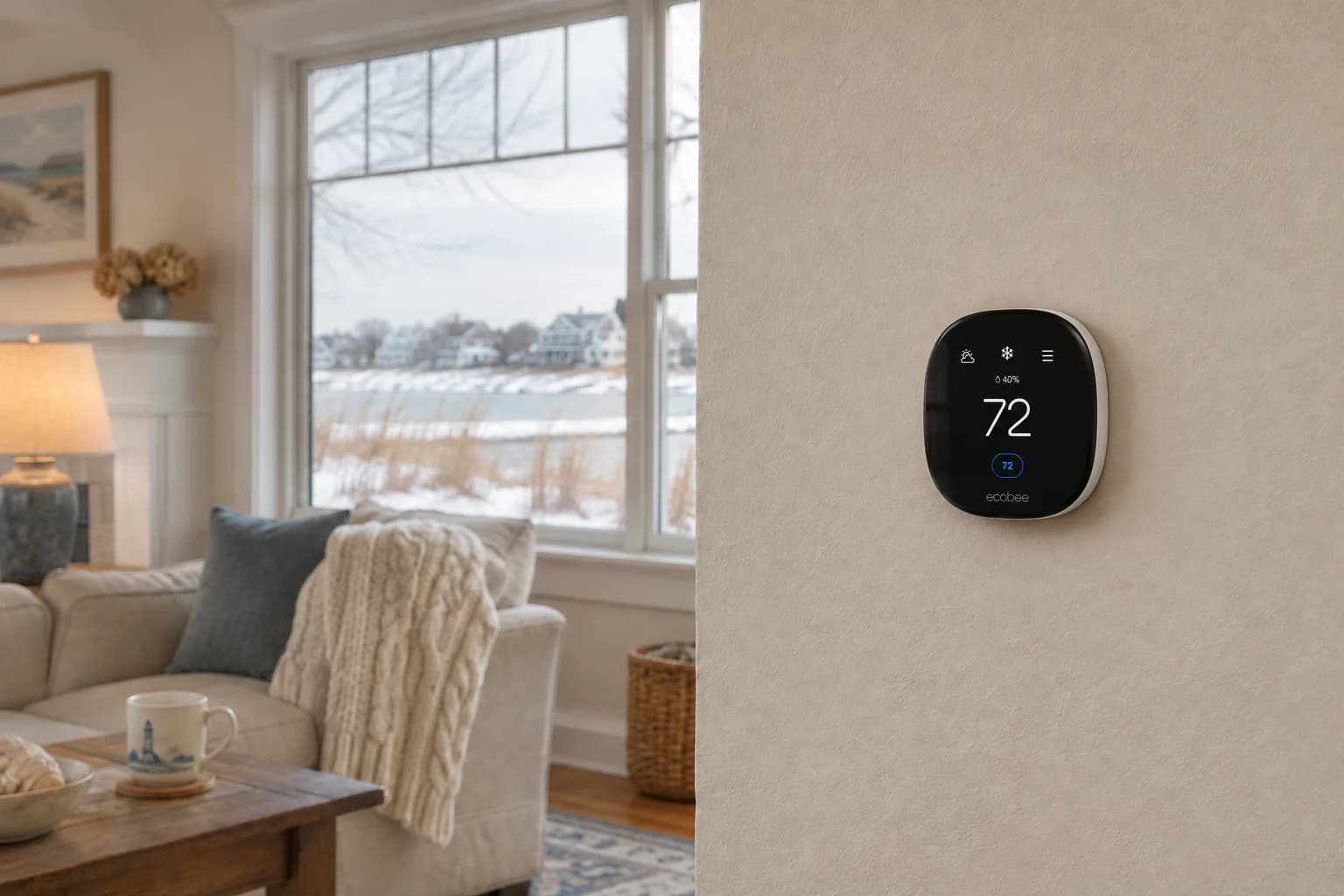
Illustrative image; the thermostat display is shown for context and is not a recommended setting for every home.
Quick Answer
There is no single winter thermostat temperature that is right for every New Jersey home. Choose a setting that keeps the people in the home comfortable and safe, then consider a modest scheduled setback if you use a furnace or boiler and will be asleep or away for several hours. Heat pumps are different: ENERGY STAR recommends choosing a comfortable temperature and keeping it steady instead of using deep setbacks. If a home will be vacant during freezing weather, do not turn the heat off; maintain safe heat and follow a property-specific winterization plan to protect plumbing.
The Short Answer: Start With Comfort and Your Heating System
A thermostat setting is personal. The right choice depends on who is home, how the rooms feel, the type of heating system, and whether the home is occupied. A number that feels comfortable in one house may feel too warm or too cool in another.
The heating equipment matters too. For a conventional furnace or boiler, lowering the temperature for a scheduled period may reduce heat loss while the home is cooler. A heat pump generally works best at a steady setting, because a large setback can cause some systems to call for less-efficient auxiliary heat during recovery. Check the manufacturer's instructions or ask an HVAC professional about your equipment before creating a deep setback.
If Your Home Uses a Furnace or Boiler
For many conventional heating systems, a programmable thermostat can lower the temperature while people are asleep or away and return to the preferred setting before they wake or come home. The Department of Energy says a 7–10°F adjustment for about eight hours a day may reduce annual heating and cooling costs by up to 10%; actual savings vary with the home, equipment, weather, schedule, and energy rates.
Treat that figure as a possible savings estimate, not a promise or a required setting. Use a smaller adjustment if a larger change makes the home uncomfortable, if the system has difficulty recovering, or if household needs call for a more stable temperature. A schedule that people will actually use is more practical than frequent manual changes.
- Pick a comfortable occupied setting as your starting point.
- If suitable for your equipment, schedule a moderate reduction during regular sleep or away periods.
- Allow the system time to return to the occupied setting; avoid large last-minute jumps.
- If comfort or recovery is poor, adjust the schedule and have the system checked if the problem persists.
If Your Home Uses a Heat Pump
Air-source heat pumps move heat rather than producing it in the same way as a fuel-burning furnace. ENERGY STAR advises heat-pump owners to choose a comfortable temperature and keep it steady rather than lowering it when asleep or away. The thermostat and system controls are designed to work together, and a deep setback may prompt some systems to use auxiliary heat while trying to recover quickly.
Use the thermostat mode recommended for your system, usually Heat rather than Auto when the goal is winter heating. Do not switch to Emergency Heat as a routine energy-saving setting; it is intended for specific situations described by the system manufacturer. If the thermostat frequently shows auxiliary heat, the house cannot maintain temperature, or the system behaves differently than expected, ask an HVAC technician to check the setup and operation.
What About a Vacant Shore Home or a Cold Snap?
A vacant home needs a different plan from a regularly occupied one. Do not turn the heating system off simply to save energy when freezing weather is possible. Keep heat operating at a safe level for the property and protect plumbing that runs through exterior walls, crawlspaces, garages, or other cold areas. The safe setting depends on insulation, pipe location, weather, system reliability, and whether anyone is checking the home; there is no single number that guarantees pipes will not freeze.
A smart thermostat can help you see indoor temperatures or receive alerts when compatible with your equipment and internet service, but it cannot prevent every outage or pipe problem. Arrange regular in-person checks for a seasonal property, know how to reach the water shutoff, and follow a plumber's winterization advice for the home's specific piping.
Simple Thermostat and Comfort Checks
Before changing the schedule, confirm the thermostat is in the correct mode and that its clock and programmed times are accurate. Keep lamps, televisions, direct sunlight, and drafts from heating or cooling the thermostat itself, since that can affect what it senses. Replace or clean the HVAC filter as directed for your equipment, and keep supply and return registers clear.
If one room remains much colder than the rest, changing the whole-house thermostat may make other rooms uncomfortable without fixing the underlying cause. Blocked registers, return-air restrictions, duct leakage, drafts, and insulation differences can all affect room comfort.
When to Arrange Heating Service
Contact an HVAC professional if the system cannot maintain the selected temperature, runs unusually long, cycles on and off repeatedly, makes new noises, or leaves several rooms uncomfortable. A technician can check thermostat compatibility and placement, controls, airflow, and equipment operation before recommending a repair or replacement.
Express provides heating service in New Jersey. Share what type of system you have, the thermostat mode and schedule, what the display shows, and when the comfort problem occurs to help the team understand the service request.
Frequently Asked Questions
What is the best thermostat setting in winter in New Jersey?
There is no single best temperature for every home. Choose a setting that is comfortable and safe for the people and pets in the home, and account for your heating system. Conventional furnaces and boilers may be suitable for scheduled setbacks; heat pumps generally work best at a steady setting.
Should I turn my thermostat down at night?
If you have a conventional furnace or boiler, a scheduled reduction while you sleep may save energy if it remains comfortable and the system recovers normally. ENERGY STAR advises heat-pump owners to keep a steady temperature rather than lowering it overnight.
Should I lower the thermostat when I leave home?
For a conventional furnace or boiler, reducing the setting during a regular absence may save energy. For a heat pump, ENERGY STAR recommends a steady temperature. If the home is vacant in freezing weather, do not turn the heat off; protect the plumbing and arrange property checks.
Does a lower thermostat setting always save money?
Using less heat generally reduces heat loss, but savings depend on the home, equipment, weather, energy rates, and schedule. A deep setback on some heat-pump systems may trigger auxiliary heat during recovery, so follow the equipment guidance rather than assuming the same schedule works for all systems.
What temperature should I leave a vacant house at in winter?
There is no universal thermostat number that guarantees a vacant home’s pipes will not freeze. Keep the heating system operating, account for vulnerable pipe locations and the forecast, arrange in-person checks, and get property-specific winterization guidance from a plumber.
Why is one room cold even when the thermostat is set higher?
The cause may be local to that room, such as a blocked supply register, restricted return-air path, duct problem, draft, insulation gap, or thermostat location. Turning up the whole-house setting may not solve the room-level issue; an HVAC inspection can help identify the cause.