
Plumbing
How to Winterize a Shore House in New Jersey: Plumbing, HVAC & Home Checklist
The beach chairs are packed. The outdoor shower, water lines, and heating system still need a plan. Here is what to check before you close your shore house for winter.
Quick Answer
To winterize a New Jersey shore house, decide whether it will stay heated or close for the season. Protect outdoor plumbing, arrange appropriate water shutoff and professional drain-down, service the heat, inspect the roof, and plan property checks. Closing the main valve alone does not remove water from pipes, fixtures, or appliances.
The Expensive Part Isn't Always The Broken Pipe
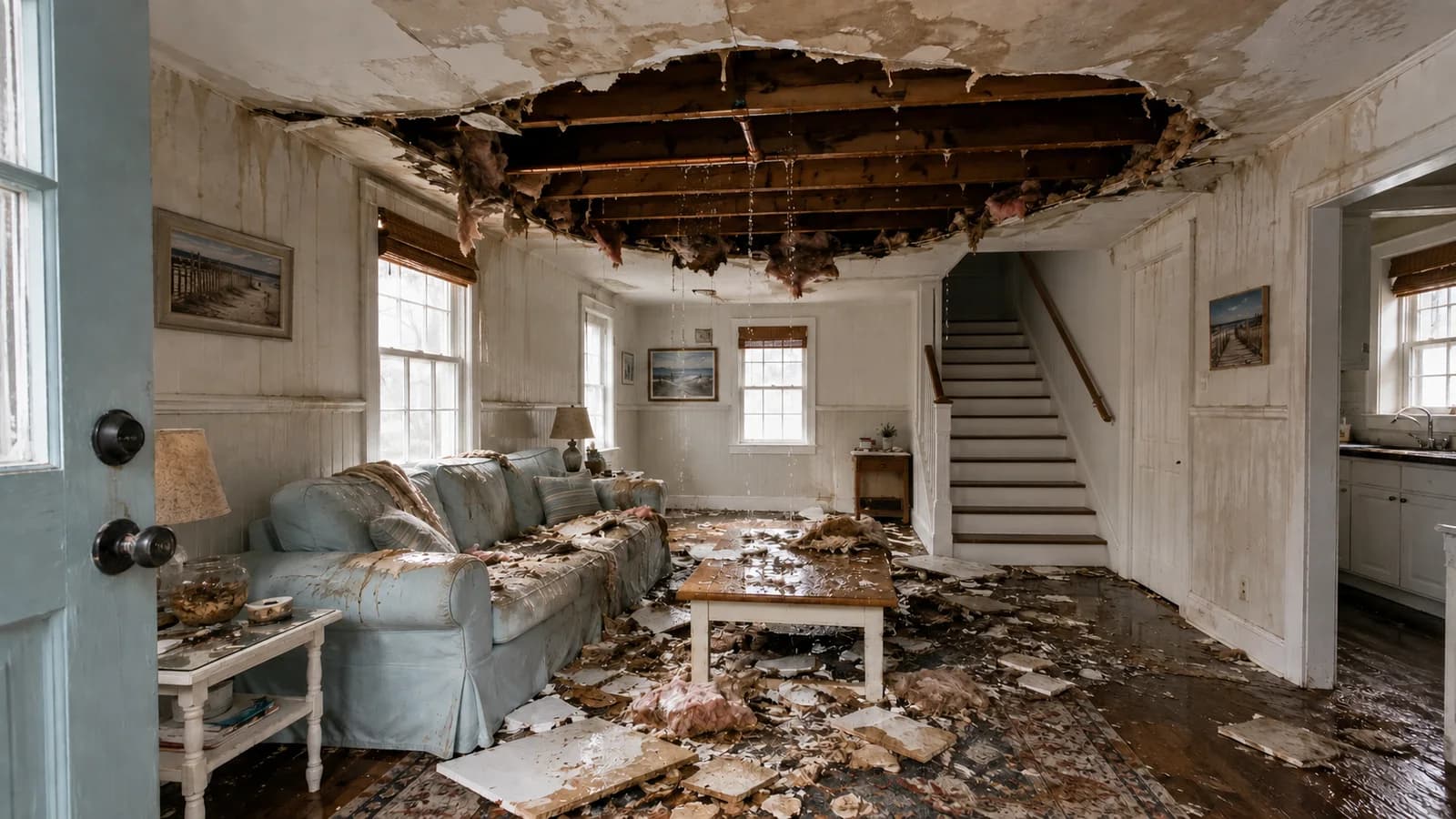
Imagine coming back to your shore house and finding the living-room ceiling on the floor. A supply pipe between floors has split, and water has soaked the insulation, drywall, furniture, and flooring below. In an empty home, the problem can keep growing because nobody is there to notice it or close the valve.
The financial stakes are real: State Farm reported that its average payment for freezing-related water-damage claims exceeded $30,000 from 2024 through June 2025. That is one insurer's national figure for a broader category of freeze damage, not a New Jersey burst-pipe average, a plumbing repair price, or an estimate for your house.
Express handles the plumbing side: finding and repairing damaged piping and complete repiping projects when the condition of the system calls for it. Water extraction, drying, mold remediation, and rebuilding damaged interiors require separate restoration professionals. Preventing a leak, detecting it early, and limiting how long water keeps flowing are the focus here.
Your house does not need a record-breaking winter to suffer freeze damage. Prepare for a cold spell or heating failure regardless of the seasonal forecast.
First, Will You Visit This Winter Or Close The House Completely?
An October weekend on Long Beach Island and an empty house until May call for different plans. Decide how you will use the property before changing valves, thermostats, or breakers. A seasonal closing is a coordinated plumbing, heating, and property-care job, not simply a lower thermostat setting.
If you will keep using the home, maintain reliable heat and protect exposed seasonal plumbing separately. If nobody will return for months, ask a licensed plumber about a full domestic-water winterization. New Jersey American Water recommends considering a utility shutoff and professional drain-down for extended winter absences; contact your own water provider for its procedure.
A plumbing drain-down is not permission to shut off every utility. Boilers, fire sprinklers, pumps, alarms, and some appliances may still need water, power, fuel, or heat. Have the relevant professionals confirm a written plan for your particular house.
When Should You Winterize A New Jersey Shore House?
Start planning around your last regular stay and complete vulnerable outdoor-plumbing work before freezing weather reaches the property. Do not use a fixed holiday as a guarantee that exposed pipes are safe. An outdoor shower may need to be closed before the rest of the house.
For an LBI seasonal home, map what is actually exposed: shower supply lines, under-deck piping, an unheated garage, or plumbing beneath an elevated floor. Wind through an open area removes heat faster, and a warm living room does not tell you the temperature around those pipes.
Book the closing before you leave, photograph the agreed valve and equipment settings, and tell anyone with access what has been winterized. One unplanned weekend visit can put water back into a system that was supposed to stay drained.
1. Locate The Water Shutoff And Check For Leaks
Identify the homeowner-accessible main water valve and each outdoor branch shutoff. Keep them reachable, label them clearly, and ask a plumber to evaluate a stiff, leaking, or corroded valve rather than forcing it. Leave utility-owned curb stops and meter work to the provider.
Inspect accessible supply connections, toilet valves, appliance hoses, and the area around the water heater before closing day. A small drip is easier to investigate while someone is there than after the house has been unattended.
Before shutting the main, have a heating professional assess any boiler or combined hot-water/heating equipment. Do not disable a fire sprinkler supply. Travelers specifically flags these dependencies when advising owners about water shutoffs.
2. Winterize Outdoor Showers, Hose Bibs, And Seasonal Lines
Disconnect garden hoses, drain them, and put them away. For an exterior faucet with a dedicated indoor shutoff, the branch may be isolated and drained according to its design. A faucet cover is not a substitute for protecting a water-filled line through a prolonged freeze.
An outdoor shower deserves its own check. Hot and cold feeds, a mixing cartridge, hand-shower hose, and low sections of pipe can retain water. Turning the shower handle off does not empty those parts. Ask your plumber to confirm the correct closing procedure rather than assuming one open tap drains everything.
Have irrigation, pool, and other seasonal systems closed according to their installers' instructions. Keep a record of which branches are off, which drains remain open, and what must be restored before spring use.
3. Account For Water Left In Fixtures And Appliances
The main valve stops incoming water; it does not empty the house. Low pipe runs, toilet components, drain traps, filters, refrigerator lines, and appliance pumps can hold water after faucets stop flowing. A professional closing should inventory these items, not just count the bathrooms.
Washing machines, dishwashers, ice makers, and treatment equipment need their own manufacturer-specific procedures. Do not improvise a compressed-air blowout or pour antifreeze into appliances. Leave pressure selection, isolation, and equipment protection to the professionals handling the closing.
Where a closing procedure calls for antifreeze in a plumbing fixture or trap, it must be a product specifically rated for that application and used according to its label. Never use automotive antifreeze or casually add chemicals to drinking-water lines. Drains also need their sewer-gas seals maintained.
4. Give The Water Heater Its Own Winter Plan
A tank, a tankless heater, and a combination heating appliance do not share one shutdown procedure. Ask the plumber to record the exact model and whether it is staying in service, entering a permitted standby mode, or being drained for a full closing.
Rinnai notes that built-in tankless freeze protection depends on power and does not automatically protect the external piping. Other models may have additional fuel or operating requirements. Follow your unit's manual, including its instructions for extended absence and power loss.
Do not drain a heater while its heat source is operating, and do not restore an electric tank's power until it has been refilled and purged as instructed. A spring reopening should include controlled refilling and leak checks before equipment returns to service.
5. Prepare The Heat Before The House Is Empty
If water remains in the plumbing, keep dependable heat throughout the protected areas. The American Red Cross recommends a thermostat setting of at least 55°F when away in cold weather. That is a baseline, not proof that a crawlspace or exterior-wall pipe will stay warm; some houses need a higher setting and additional protection.
Test the heating system while you are home and arrange fall service before you rely on it unattended. Check the filter against the equipment manufacturer's requirements, keep supply and return vents open, and confirm that fuel deliveries and necessary utilities will continue.
Keep heat-pump airflow and furnace vent openings clear of debris and snow. Do not wrap an operating heat pump or assume every outdoor unit should be disconnected for winter. A gas-fired system may still require electricity to operate.
Test smoke and carbon monoxide alarms according to their instructions. Portable space heaters are not an unattended freeze-protection plan.
6. Check Crawlspaces Without Blocking Essential Openings
Look from a safe, accessible area for wet or missing insulation, signs of leaks, and exposed pipe runs. Do not enter standing water or a confined space with unknown electrical or structural hazards. Pipe insulation slows heat loss; it does not create heat or make an unheated space freeze-proof.
Coastal homes need particular care around foundation openings. Do not stuff flood vents with insulation as a winter project. FEMA explains that flood openings must allow water to enter and leave; solid covers can defeat that function. A professional should distinguish required flood openings and combustion-air openings from gaps that can safely be sealed.
7. Inspect The Roof And Prepare For Coastal Storms
A house can have properly winterized plumbing and still suffer water damage through the roof. From the ground, look for displaced shingles, visibly loose flashing, and damaged gutters. Inside, note ceiling stains and accessible attic signs of moisture. Leave roof access and repair work to an equipped roofing professional.
Arrange gutter and downspout clearing where needed, secure loose outdoor items, and make sure someone can check the property after a storm. The National Weather Service includes roof condition and clear drainage in its home-preparation guidance.
A drone inspection can help document visible roof conditions without a homeowner climbing a ladder, but it cannot rule out every concealed defect or replace all hands-on checks. If you have an existing stain or recurring leak, describe that history when scheduling the inspection.
8. Use A Smart Thermostat To Watch For Falling Temperatures
A smart thermostat can help you keep an eye on the house after you leave. Choose equipment compatible with your heating system, and confirm that the particular model supports the low-temperature alerts you need. Review schedules and away settings so an automatic setback does not lower the house below your agreed winter setting.
An alert is not backup heat. A thermostat cannot make a failed furnace run or warm every pipe inside an exterior wall. Google, for example, says Nest Safety Temperature notifications need working home Wi-Fi and internet. Local temperature control and remote notifications are different functions; neither replaces a functioning heating system.
Before your last visit ends, test notification delivery and arrange a local person who can respond. Where appropriate, add a separate temperature sensor near vulnerable plumbing, within the device's operating limits. A comfortable hallway reading does not prove that an unheated crawlspace is safe.
9. Pair Leak Detection With An Automatic Water Shutoff
A leak alarm and an automatic shutoff do different jobs. A point sensor detects water that reaches its contacts and can sound an alarm or send a notification, depending on the model. Place sensors where a leak is likely to reach them, such as near a water heater, washing machine, or under a sink. One sensor cannot see every leak hidden between floors.
A whole-home flow-monitoring shutoff watches the incoming supply and can close its valve when its detection rules identify a suspected leak. Some systems can also respond to compatible point sensors. For example, Moen requires its detector-to-shutoff feature to be linked and enabled; owning both devices is not the same as having that protection configured.
For a seasonal house, discuss the expected water use, pipe size, placement, and plumbing layout with a licensed plumber before selecting a system. Installation must preserve fire protection and account for boilers or other water-dependent equipment. An automatic valve can limit additional supply water after it closes; it does not drain the pipes, prevent freezing, or stop roof leaks and flooding.
Ask what still works during an internet or power outage. Moen documents a local operating mode without Wi-Fi, but it still requires power. Backup options, alerts, and shutoff behavior vary by device. Test the installed system according to its instructions, keep batteries maintained where used, and give your local keyholder a response plan.
10. Keep A Local Keyholder And A Written Response Plan
Put the homeowner, nearby keyholder, utility, and service contacts in the closing record. Schedule in-person checks during the absence and after severe weather when it is safe to enter. A silent app does not prove the house is fine.
If someone discovers active water damage, keep them away from wet electrical equipment and sagging ceilings. Close the homeowner-accessible water valve only if it is safe to reach, and call for plumbing help. Do not walk through standing water or enter an unstable room to investigate.
Keep necessary heating, sump-pump, security, and monitoring circuits energized. Ask your insurance agent what your particular policy expects for seasonal occupancy, heat, shutoffs, and property checks; do not assume every policy treats a winter closing the same.
Your Last-Day Shore-House Closing Checklist
Use this as a handoff checklist after the home-specific work is agreed. It is not a substitute for a professional drain-down procedure.
- Record whether the house is staying heated and usable or undergoing a full seasonal closing.
- Confirm the main and branch valve settings, without disabling boiler support or fire protection.
- Check that outdoor showers, hoses, faucets, and other seasonal systems have been addressed.
- Document how fixtures, traps, water heaters, and connected appliances are protected.
- Verify the thermostat, heating operation, fuel supply, and required power circuits.
- Test temperature and leak alerts, confirm automatic shutoff settings if installed, and document outage limitations.
- Leave shutoff instructions and emergency contacts with a local keyholder who can respond.
- Record roof or drainage concerns, secure outdoor items, and arrange property checks.
- Leave a dated reopening checklist so nobody turns on water or equipment blindly.
What Can You Do Yourself, And When Should You Call Express?
Homeowners can make the inventory, disconnect hoses, photograph accessible valves, check alarms, and look for visible leaks or damage. Full drain-downs, appliance winterization, unfamiliar valves, heating-system changes, and roof access need the appropriate professional.
When requesting service, tell us the property location, your last planned visit, whether anyone will return during winter, the type of heat and water heater, and whether there is an outdoor shower or fire sprinkler system. Those details help define the work instead of assuming every shore house needs the same package.
Express Plumbing Air Roofing serves homeowners on Long Beach Island and in surrounding New Jersey communities. Ask us about winterization, plumbing repairs, and complete repiping when needed, along with the heating and roof concerns that apply to your closing. We do not provide water-damage restoration. The goal is a clear plan for the house you actually own, plus a safe path to reopening it.
Frequently Asked Questions
Is Turning Off The Water Enough To Winterize A Shore House?
No. It limits new water entering but leaves water in pipes, fixtures, traps, and appliances. A full seasonal closing requires a system-specific drain-down and protection plan, with separate consideration for heating equipment and fire sprinklers.
What Temperature Should I Leave My Shore House At In Winter?
For a home with water still in its plumbing, the American Red Cross recommends at least 55°F while away. Exposed pipe locations may need additional protection or a higher setting. Do not assume the thermostat reading represents every part of the house.
Do I Need To Winterize An Outdoor Shower If I Keep The House Heated?
Yes, an unused outdoor shower needs its own freeze-protection plan. Indoor heat may not reach its supply lines, mixing valve, or shower head. Have both hot and cold branches and any trapped water addressed before freezing weather.
Can I Turn Off All The Breakers After Winterizing?
Not automatically. Heat, pumps, alarms, monitoring, and some water-heater freeze-protection features need power. Have a professional identify what must remain energized before changing the electrical setup.
Does A Tankless Water Heater Need Winterization?
It needs model-specific protection. Built-in freeze protection has operating limits and may depend on power and fuel; it may not protect external pipes. A seasonally closed or unheated property may require draining under the manufacturer's instructions.
Can A Smart Thermostat Prevent Frozen Pipes?
It can help monitor indoor temperature and, on supported models, alert you to a low-temperature condition. It cannot fix failed heating or guarantee that concealed pipes stay warm. Check notification and power requirements, protect exposed plumbing, and arrange someone nearby who can respond.
Will A Leak Detector Automatically Turn Off My Water?
Not by itself. A point sensor generally detects water at its location and triggers an alarm or notification. Automatic shutoff requires a compatible valve and correctly configured controls, or a flow-monitoring shutoff system. Verify exactly what your installation does, including during power or internet outages.
How Much Does Shore-House Winterization Cost?
There is no single price for every house. The quote depends on the number of fixtures, outdoor showers, appliances, equipment types, accessibility, and whether heating and roof work are included. Request an itemized scope and ask whether spring reopening is a separate visit.
Sources And Safety References
- American Red Cross: Preventing and Thawing Frozen Pipes
- New Jersey American Water: Prepare Pipes for Winter Weather
- Travelers: How to Help Prevent Water Damage
- Travelers: Winterizing a Vacant Home
- Rinnai: Protect Your Product During Extreme Cold
- FEMA Technical Bulletin 1: Flood Openings
- National Weather Service: Home Storm Preparation