
Heating
Boiler vs. Furnace: What’s the Difference for New Jersey Homes?
A furnace heats air through ducts. A boiler heats water or makes steam and sends it through pipes. Learn what that means for comfort, maintenance, cooling, and replacement planning.
Quick Answer
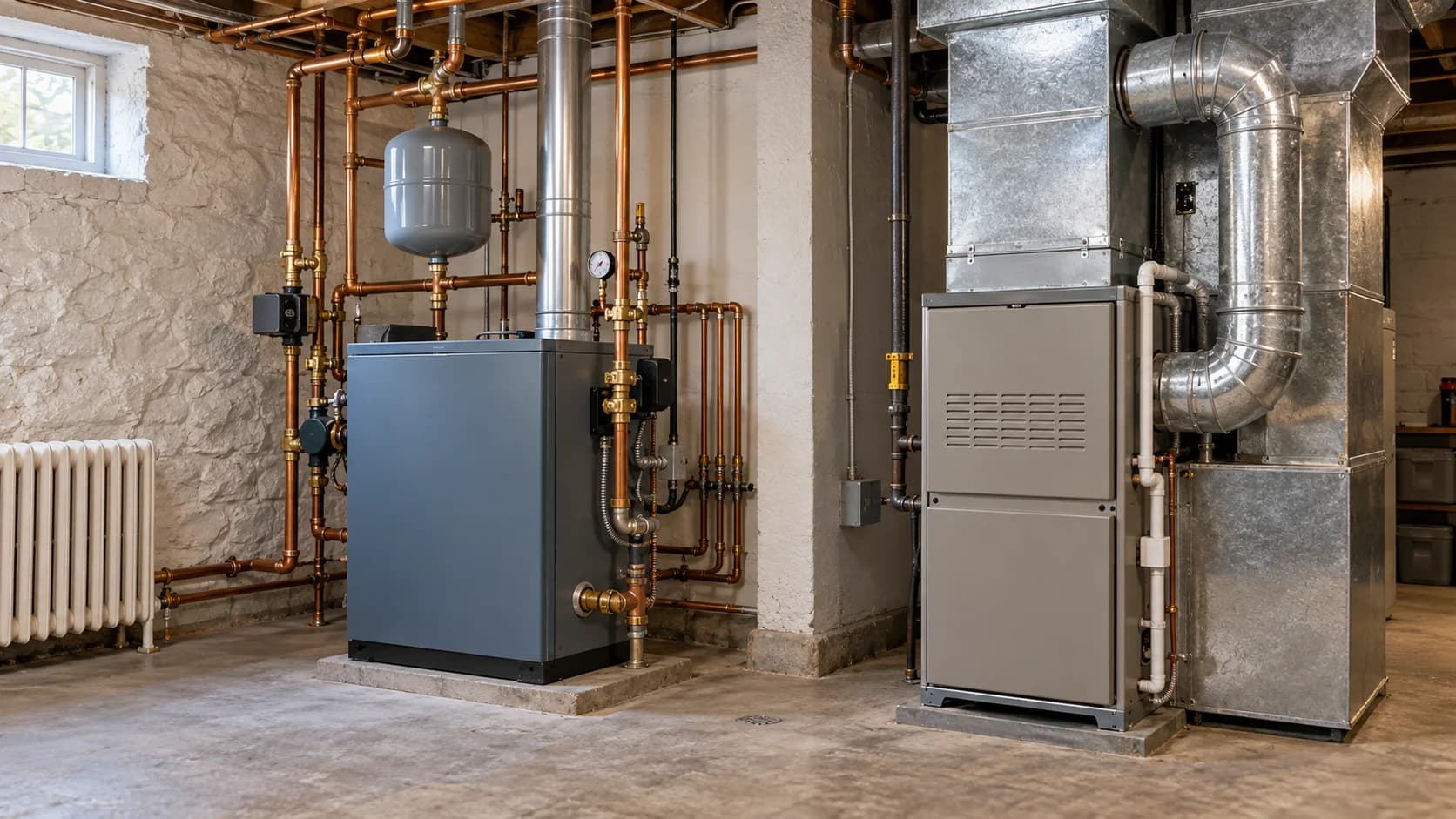
A furnace heats air and distributes it with a blower, ducts, and supply registers. A boiler heats water or produces steam and sends it through pipes to baseboard units, radiators, or radiant-floor tubing. Neither is automatically better: a good repair or replacement decision depends on the existing distribution system, equipment condition, comfort goals, cooling needs, fuel availability, installation constraints, and a proper load calculation. If warm air blows from supply vents, you likely have a furnace or another forced-air system. If you have radiators or baseboard heat without supply vents, you likely have a boiler-driven hydronic or steam system.
The Basic Difference: Air vs. Water
A forced-air furnace warms air in its cabinet, then a blower sends that air through ducts to supply registers. Room air returns through return grilles to be reheated and circulated again.
A boiler heats water or produces steam for space heating. Hot water moves through piping to baseboard, radiators, or radiant-floor tubing; steam uses its own piping and radiators. The Department of Energy describes furnaces and boilers as central-heating systems with different distribution methods: ducts and warm air for furnaces, pipes and hot water or steam for boilers.
How To Identify the System in Your Home
Look at how heat reaches the rooms, not only at the equipment in the utility room. Supply vents in floors, walls, or ceilings that blow warm air, along with large return grilles, normally indicate a forced-air furnace or another ducted system.
Baseboard covers that warm up, freestanding radiators, cast-iron radiators, or tubing beneath a floor usually indicate a boiler system. Some homes use more than one heating system, so a site assessment matters before making a repair or replacement choice.
- Warm air from supply registers: usually forced air.
- Radiators or hydronic baseboard without supply vents: usually a boiler system.
- An outdoor AC unit does not determine whether heat comes from a furnace or boiler.
- A boiler may heat the home only, or it may work with an indirect water heater; the actual piping determines its role.
Comfort, Cooling, and Everyday Operation
Forced air can change room temperature quickly because a blower delivers heat directly into the living space. The same ducts can often support central cooling, although comfort still depends on duct sizing, return-air paths, filtration, balancing, thermostat location, insulation, and air leakage—not solely on the furnace cabinet.
Hydronic or steam heat warms radiators, baseboard, or flooring that then warms the room. Many homeowners value its steady, quiet feel. A boiler system normally needs a separate cooling solution when there is no existing ductwork, and performance depends on piping, circulators or vents, zone controls, radiator condition, and insulation.
Maintenance Needs Are Different
Furnace service commonly evaluates combustion and venting where applicable, the heat exchanger, blower, electrical components, filters, controls, and airflow. Use the correct filter size and replacement interval for the system; a restrictive or neglected filter can affect comfort and equipment performance.
Boiler service commonly evaluates burner and combustion performance where applicable, venting, pressure and temperature controls, circulators, expansion components, relief-valve condition, piping, and the system’s water or steam behavior. Steam, hot-water, condensing, and older non-condensing boilers have different service needs. Do not drain, add chemicals to, or change boiler pressure without qualified direction.
Trouble Signs Worth a Service Call
For a forced-air system, schedule service for cold rooms, persistent new noises, short cycling, weak airflow, repeated filter loading, a blower that runs unexpectedly, or a system that cannot maintain the thermostat setting. A brief dusty smell at first startup can be normal; a persistent electrical, fuel, or burning smell needs prompt attention.
For a boiler system, watch for cold radiators or baseboard zones, banging or whistling, water around the boiler or nearby piping, repeated loss of heat, uneven zones, or visible corrosion. A leaking relief valve or change in normal operation is not a homeowner adjustment project. For a suspected gas leak, leave the area and contact the utility or emergency services.
Can You Switch From a Boiler to a Furnace?
Sometimes, but it is not a simple equipment swap. Replacing a boiler with a furnace can mean designing and installing ductwork, supply and return paths, registers, electrical work, and a cooling strategy. Replacing a furnace with a boiler can require new hydronic piping, baseboard or radiators, controls, and a separate cooling plan.
Ask for an assessment of the entire distribution system—not just a quote for a new appliance. The right equipment should follow a heating-load calculation and a review of ducts or piping, insulation, air leakage, combustion venting, electrical capacity, zoning, and cooling goals. A high efficiency rating cannot fix undersized ducts, poor return air, failing radiators, or an oversized system.
What To Compare Before Replacing Heat
The useful comparison is not boiler versus furnace in the abstract. It is the complete heating system your home needs. A home with ducts, central cooling, and airflow issues presents a different decision than an older home with working radiators and no practical duct path. Coastal and seasonal homes may also need attention to equipment location, pipe exposure, outage planning, remote monitoring, and winter vacancy.
Ask what is included beyond the appliance: permits, removal, venting, condensate routing, electrical work, thermostat controls, duct or piping modifications, filtration, startup, commissioning, warranty registration, and testing. Clear scope makes proposals comparable.
- Existing ducts, baseboard, radiators, and zone controls.
- Heating-load calculation and equipment sizing.
- Cooling needs and whether the home needs ducts.
- Fuel type, venting, condensate, and electrical requirements.
- Access to the mechanical room and effects on finished spaces.
- Maintenance needs, warranty terms, and the complete project scope.
When To Schedule Heating Service
Schedule a diagnostic visit when the system is not keeping up, has a new warning sign, or is due for seasonal attention before the coldest weather arrives. Repairs may make sense when the issue is isolated and the system is otherwise safe, correctly sized, and serviceable. Replacement planning becomes more important when repairs recur, key components are failing, the equipment no longer fits the home, or the distribution system needs significant work.
Express can inspect the actual system and explain repair or replacement options for your New Jersey home. Do not remove panels, alter gas connections, or change boiler controls yourself.
Frequently Asked Questions
Is a Boiler Better Than a Furnace?
Neither is automatically better. A boiler uses water or steam through pipes and radiators or baseboard; a furnace uses air through ducts. The better choice depends on the existing distribution system, cooling goals, equipment condition, project scope, and a proper load calculation.
Can a Boiler Also Heat My Hot Water?
Some homes use a boiler with an indirect water heater, but not every boiler provides domestic hot water. The equipment and piping layout must be inspected to determine how your home is configured.
Does a Furnace Use Radiators?
Typically no. A furnace generally heats air and distributes it through ducts and registers. Radiators and hydronic baseboard are usually supplied by a boiler system.
Can I Add Air Conditioning to a Boiler-Heated House?
Yes. Options can include ducted cooling if a practical duct path exists or ductless equipment for selected areas. A site assessment should account for layout, electrical capacity, comfort goals, and the existing heating system.
How Do I Know if My Boiler or Furnace Needs Replacement?
Recurring repairs, declining comfort, safety or venting concerns, difficult-to-source components, poor fit for the home, and major distribution-system issues can justify a replacement discussion. Compare repair options with the complete replacement scope rather than relying on age alone.