
Heating
Why Is One Room Colder Than the Rest? 7 Heating and Airflow Causes
A cold bedroom or addition does not automatically mean the furnace is failing. Restricted airflow, duct problems, drafts, insulation gaps, and system balancing can all make one room less comfortable.
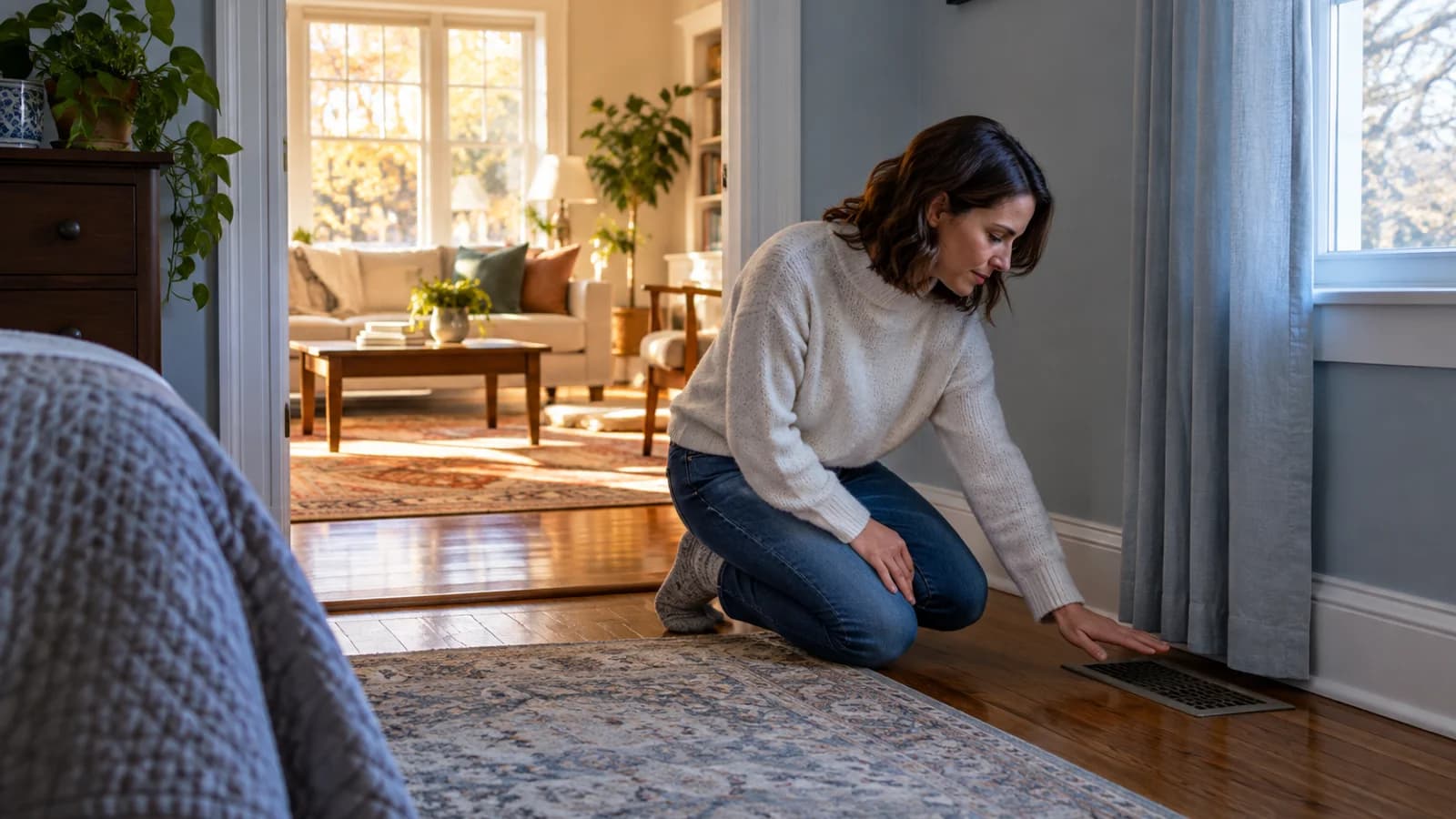
Illustrative image; not an Express customer property.
Quick Answer
If one room is colder than the rest of your New Jersey home, the cause is often local: a blocked or weak supply register, a restricted return-air path, a leaking or poorly balanced duct, drafts, or insufficient insulation around that room. A dirty filter can reduce airflow throughout the system, though it usually does not explain a problem in only one room by itself. Start by checking the thermostat setting, filter, registers, and return-air path from a safe position. If the temperature difference persists, have an HVAC professional measure airflow and inspect the ductwork and room envelope before recommending equipment replacement.
The Short Answer: Check Airflow and the Room Before Replacing the System
When one room stays colder than the rest, the heating system may be making heat but not delivering enough of it to that space. Airflow restrictions, duct leakage, an obstructed return path, drafts, insulation gaps, and room-to-room balancing are common places to investigate. The exact cause depends on the home and heating system.
A single cold room is not proof that the furnace or heat pump has failed. Note when the room feels coldest, whether warm air reaches its register while the system runs, and whether the problem began after a renovation, new flooring, furniture change, or HVAC work. These details help a technician narrow down the cause.
7 Reasons One Room May Be Colder
Several different problems can produce the same comfort complaint. These are common possibilities—not a diagnosis of your particular system.
- A supply register is closed, blocked, or dirty: A rug, furniture, dust, or a closed damper can restrict warm air entering the room. Make sure the register is open and unobstructed; do not remove duct covers or reach inside.
- The return-air path is restricted: Heated air needs a way to return to the system. A closed bedroom door, blocked return grille, or a room without a suitable return path can affect circulation and pressure balance.
- A duct is leaking, disconnected, or poorly balanced: A leak or loose connection can let heated air escape before it reaches the room. Duct design and balancing issues may leave a distant room with less airflow than nearby rooms.
- The duct run is long or passes through a cold area: Ducts routed through an unheated attic, crawlspace, garage, or exterior chase can lose heat. Long or undersized runs may also deliver less air to the far end of the home.
- The room has drafts or weak insulation: Older windows, exterior doors, attic hatches, recessed fixtures, and gaps around floorboards can allow heat to escape or cold air to enter. A room over a garage or near an exposed corner may be especially affected.
- The thermostat or zoning does not reflect that room: A thermostat in a warmer hallway may satisfy the heating call before a colder room reaches the same comfort level. Zoning controls, remote sensors, and schedules may also be set up in a way that does not match how the rooms are used.
- The system needs service or is not properly sized for the home: A dirty filter can reduce system airflow, and equipment or ductwork problems can affect comfort. If several rooms are cold, the whole heating system needs evaluation; one-room symptoms alone are not enough to conclude that the equipment must be replaced.
Safe Checks You Can Make Before Calling for Service
Start with simple observations. Confirm that the thermostat is set to heat and that its schedule has not changed. Check the air filter and replace it only with the size and type recommended for your equipment. A clogged filter may make heating airflow weaker across the home.
Make sure the cold room's supply register is open and not covered by a rug, curtain, or furniture. Look for a return grille and keep it clear. If the room has a door, notice whether closing it makes the temperature difference worse; do not make permanent changes to doors, walls, or ductwork based on this test.
Compare the room with a nearby room at the same time of day, and write down the thermostat setting, system run time, and whether air is coming from the register. A basic room thermometer can help you track a pattern, but a single reading does not identify the cause.
Avoid closing many other registers to force more heat into one room. That can change system airflow and pressure in ways the equipment was not designed for. Do not open furnace panels, adjust gas or electrical components, climb into an attic, or enter a crawlspace to inspect ducts.
Why Uneven Heating Can Show Up in New Jersey Homes
New Jersey homes range from older houses with retrofitted ductwork to newer construction and seasonal shore properties. Additions, finished attics, enclosed porches, and converted garages may have different insulation levels or longer heating runs than the original rooms.
During a cold snap, those differences become easier to notice. Ducts routed through unheated attics or crawlspaces can lose heat, while drafts around older windows and exterior doors can make a room feel colder even when warm air is reaching it. A shore home's vacancy history or prior remodeling may also help explain changes in comfort.
ENERGY STAR notes that duct sealing and insulation can help with rooms that are too cold in winter. The Department of Energy also explains that the return-air path matters to room pressure and temperature balance. A technician can check the actual airflow and duct layout instead of guessing from the room's location alone.
When to Schedule an HVAC Inspection
Arrange an inspection if the room remains noticeably colder after you check the filter, registers, and return path; if little or no air comes from its supply register; or if the problem started after HVAC work or a renovation. Call sooner if you notice unusual equipment noises, short cycling, a burning or gas odor, or heating that stops working.
A technician can measure airflow, inspect accessible duct connections, check system operation, and look for return-air or control issues. If the concern appears to be drafts or insulation rather than HVAC equipment, ask what evidence points to that conclusion and which type of contractor is appropriate for the next step.
Will a Cold Room Mean You Need a New Furnace?
Not necessarily. A blocked register, duct leak, return-air problem, thermostat location, or air-sealing issue may be addressable without replacing heating equipment. Replacing the furnace or heat pump without identifying the cause can leave the same room uncomfortable.
If a contractor recommends new equipment, ask how the home's heating load and duct airflow were evaluated, what repairs were considered, and how the proposal addresses the specific cold room. A clear diagnosis should connect the observed problem to the recommended work.
Get the Cold Room Checked
If one room in your New Jersey home is colder than the rest, start with safe checks of the filter, registers, thermostat, and return-air path. When those do not solve it, Express can inspect your heating system and explain whether airflow, ductwork, equipment, or another issue needs attention.
Frequently Asked Questions
Why is one room colder than the rest of my house?
Common causes include a blocked supply register, restricted return-air path, leaky or poorly balanced ductwork, drafts, insulation gaps, thermostat placement, or a system problem. A technician can measure airflow and inspect the room and ductwork to identify which cause applies.
Can a dirty furnace filter make just one room cold?
A dirty filter can reduce airflow through the heating system and affect comfort, but it usually does not explain a problem isolated to one room by itself. Check the filter along with that room's register, return-air path, ducts, and insulation.
Should I close vents in other rooms to heat one cold room?
Do not close many registers to redirect heat without checking the system guidance. Changing airflow can affect equipment pressure and performance. Have a technician assess balancing and duct design.
Could a closed bedroom door make a room colder?
It can contribute if the room has an inadequate return-air path. If the problem is worse with the door closed, share that observation with an HVAC technician; the return path may need evaluation.
Can leaky ducts cause one room to be colder?
Yes. A disconnected, leaking, long, or poorly balanced duct can reduce the amount of heated air reaching a room. Ducts in unheated spaces can also lose heat before air reaches the register.
Does one cold room mean I need a new furnace?
No. The cause could be a register, return-air path, duct, draft, insulation, thermostat, or equipment issue. Have the problem diagnosed before deciding whether repair or replacement is appropriate.
Who should I call if one room stays cold in my New Jersey home?
Contact a licensed HVAC professional if basic, safe checks do not resolve the issue, airflow is weak, or multiple rooms are affected. A technician can inspect the heating system and duct airflow and explain the findings.