
Heating
Why Does My Furnace Smell When I Turn It On for the First Time?
A brief dusty smell can be normal when a furnace starts after months of inactivity. Gas, smoke, burning plastic, persistent electrical odors, or a carbon monoxide alarm require a different response.
Quick Answer
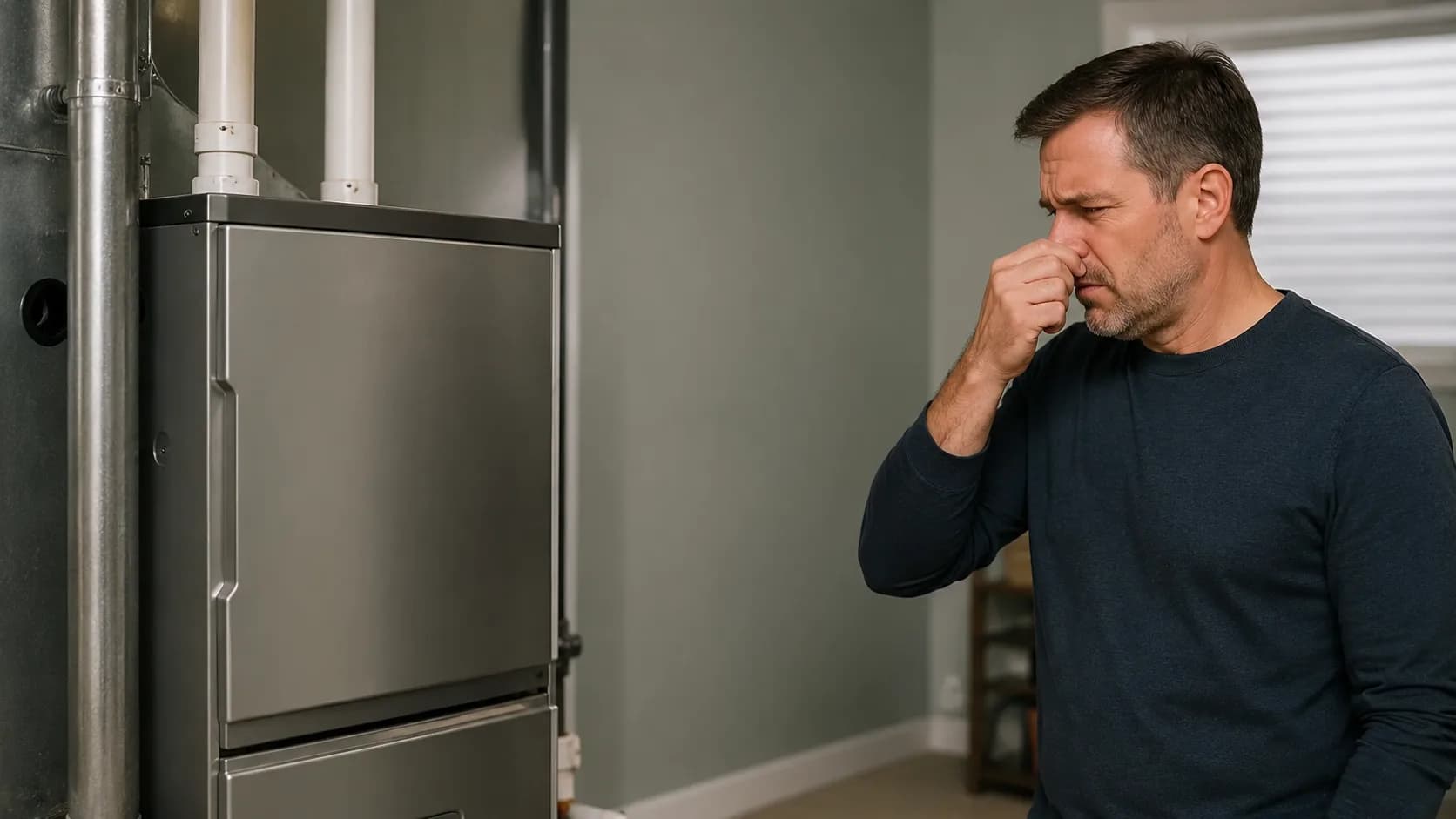
A mild dusty or slightly burnt-dust smell is often normal when a furnace runs for the first time after summer. Dust can settle on the heat exchanger, burners, and nearby surfaces, then warm up during the first cycle. The odor should fade quickly. Shut the system off and get help if the smell is strong, persists beyond the first few cycles, resembles burning plastic or electrical insulation, produces visible smoke, or accompanies unusual sounds. If you smell natural gas, leave the building and call 911 and your gas utility from outside. Carbon monoxide has no smell, so every home with fuel-burning equipment needs working CO alarms.
A Brief Dusty Smell At First Startup Is Often Normal
A furnace can collect a thin layer of household dust while it sits idle through spring and summer. When the heat starts, warmed dust on internal and nearby surfaces may create an odor similar to a dusty electric heater or a lightly toasted smell. It is usually most noticeable at the supply registers because the blower carries the air through the duct system.
A normal first-start odor should be mild and should weaken as the system completes its initial heating cycle. Open interior doors, make sure supply and return vents are unobstructed, and monitor the system. Do not assume every burning odor is dust. Strength, duration, visible smoke, and the type of smell determine whether the furnace should keep running.
What Different Furnace Smells Can Mean
The description of an odor is not a diagnosis, but it helps separate a routine seasonal startup from a possible safety problem. A technician still needs to inspect persistent or unusual odors because several failures can smell similar from inside the home.
- Dusty or lightly toasted: Often accumulated dust warming during the first cycle. It should fade quickly.
- Burning plastic, rubber, or electrical insulation: Shut the furnace off. An overheated motor, wiring problem, failing control, or foreign object may be involved.
- Smoke or a sharp burning odor: Shut the system off, keep clear of the equipment, and call for professional evaluation. Call 911 if there is a fire or immediate danger.
- Rotten eggs or sulfur: Treat this as a possible natural-gas leak. Leave the building without operating switches or creating a flame, then call 911 and the gas utility from outside.
- Musty or damp: Moisture, a wet filter, drain problem, humidifier, or microbial growth may need inspection. The source may be in the air handler or duct system rather than the furnace burner.
- Oil or exhaust: Turn off fuel-burning equipment and arrange prompt service. Odors from combustion or venting should not be ignored.
How Long Should The First-Start Furnace Smell Last?
There is no universal minute limit because homes, systems, and dust levels differ. The useful test is whether a mild dusty odor clearly diminishes during the first normal heating cycle. It should not become stronger, fill the home with smoke, irritate the eyes or throat, or return every time the furnace starts.
If the smell remains after the first few cycles, shut the system down and schedule an inspection. Persistent odor can point to a dirty filter, debris near the heat source, an overheating blower motor, damaged wiring, venting trouble, or another condition that cannot be confirmed by smell alone.
Natural Gas And Carbon Monoxide Require Different Warnings
Natural gas is odorized so a leak may smell like rotten eggs or sulfur. The New Jersey Department of Community Affairs advises occupants who notice a strong gas odor to leave the premises and call 911 and the local gas utility from outside. Do not search for the leak, operate electrical switches, use a flame, or remain indoors to call a contractor.
Carbon monoxide is different: it is colorless and odorless. You cannot use smell to decide whether a furnace is producing CO. The U.S. Consumer Product Safety Commission recommends working CO alarms on every level and outside sleeping areas, plus annual professional inspection of fuel-burning heating equipment, chimneys, flues, and vents.
If a CO alarm sounds, follow the alarm manufacturer's directions and leave the home. Headache, dizziness, nausea, weakness, confusion, or unusual fatigue can be symptoms of exposure. Seek emergency help rather than trying to diagnose the furnace yourself.
A Safe Checklist Before The First Heating Cycle
A short preseason check can improve airflow and make unusual conditions easier to notice. Follow the furnace manufacturer's instructions and avoid opening combustion, electrical, or gas compartments.
- Install a clean filter of the type and airflow rating approved for the system.
- Clear boxes, paint, paper, cleaners, and other stored materials away from the furnace.
- Open supply registers and make sure return grilles are not blocked by furniture or rugs.
- Test smoke and carbon monoxide alarms according to their manufacturers' instructions.
- Look for loose venting, water around the equipment, damaged wiring, or heavy corrosion without removing access panels.
- Run the thermostat through one normal heating cycle while you are home and able to observe the system.
- Schedule annual maintenance for fuel-burning heating equipment, including its venting path.
Why The Furnace Filter Matters
The air filter protects the blower and other system components while capturing particles carried by return air. A severely dirty or incorrectly selected filter can restrict airflow. The U.S. Department of Energy notes that clogged filters can increase furnace run time, motor wear, and energy use.
Replace or clean the filter at the interval specified by the equipment and filter manufacturers. Do not automatically install the highest available MERV rating. A filter that is too restrictive for the blower and duct system can create its own airflow problem. If filters darken unusually fast or the furnace overheats, a technician should evaluate the system rather than simply shortening the replacement interval.
When To Turn The Furnace Off And Call For Service
Turn the thermostat off and request heating service when an odor resembles overheated wiring, melting plastic, rubber, oil, or exhaust; when visible smoke appears; when a breaker trips; or when the blower or furnace makes a new grinding, buzzing, or banging sound. Do not repeatedly reset a safety switch or breaker to force the system to run.
A heating technician can inspect the filter and blower, electrical connections, ignition components, burners, heat exchanger, condensate system where applicable, safety controls, and venting. The findings should determine the repair. Smell alone cannot establish whether a motor is overheating, combustion is incorrect, or a material has entered the ductwork.
New Jersey homeowners can reduce first-cold-night surprises by scheduling furnace maintenance before sustained heating weather. Express provides heating repair and maintenance across Ship Bottom, Long Beach Island, Ocean County, Monmouth County, Atlantic County, and nearby communities.
Frequently Asked Questions
Is It Normal For A Furnace To Smell Burnt The First Time It Runs?
A mild burnt-dust smell can be normal during the first heating cycle after months of inactivity. It should fade quickly. A strong, persistent, plastic, rubber, oily, smoky, or electrical odor is not something to dismiss as seasonal dust.
How Long Should A Dusty Furnace Smell Last?
It should noticeably weaken during the first normal heating cycle and should not keep returning. If the odor remains through the first few cycles, becomes stronger, or comes with smoke or unusual sounds, turn the furnace off and arrange an inspection.
What Should I Do If My Furnace Smells Like Rotten Eggs?
Leave the building and call 911 and your gas utility from outside. Do not use electrical switches, light a flame, search for the leak, or stay inside to call an HVAC contractor.
Can You Smell Carbon Monoxide From A Furnace?
No. Carbon monoxide is colorless and odorless. Working CO alarms and professional inspection of fuel-burning equipment are necessary because smell cannot warn you of a carbon monoxide problem.
Can A Dirty Furnace Filter Cause A Burning Smell?
A clogged filter can restrict airflow and contribute to overheating, but a burning smell should not be diagnosed from the filter alone. Replace the filter only with an approved type, shut the system down if the odor is strong or electrical, and have persistent problems inspected.
Should I Run My Furnace Before The First Cold Night?
Yes. A supervised test before sustained cold weather gives you time to notice startup problems, check alarms, replace the filter if needed, and schedule service without waiting for a no-heat emergency.