
Cooling
Should You Cover Your AC Unit In Winter? The Great Condenser Cover Debate
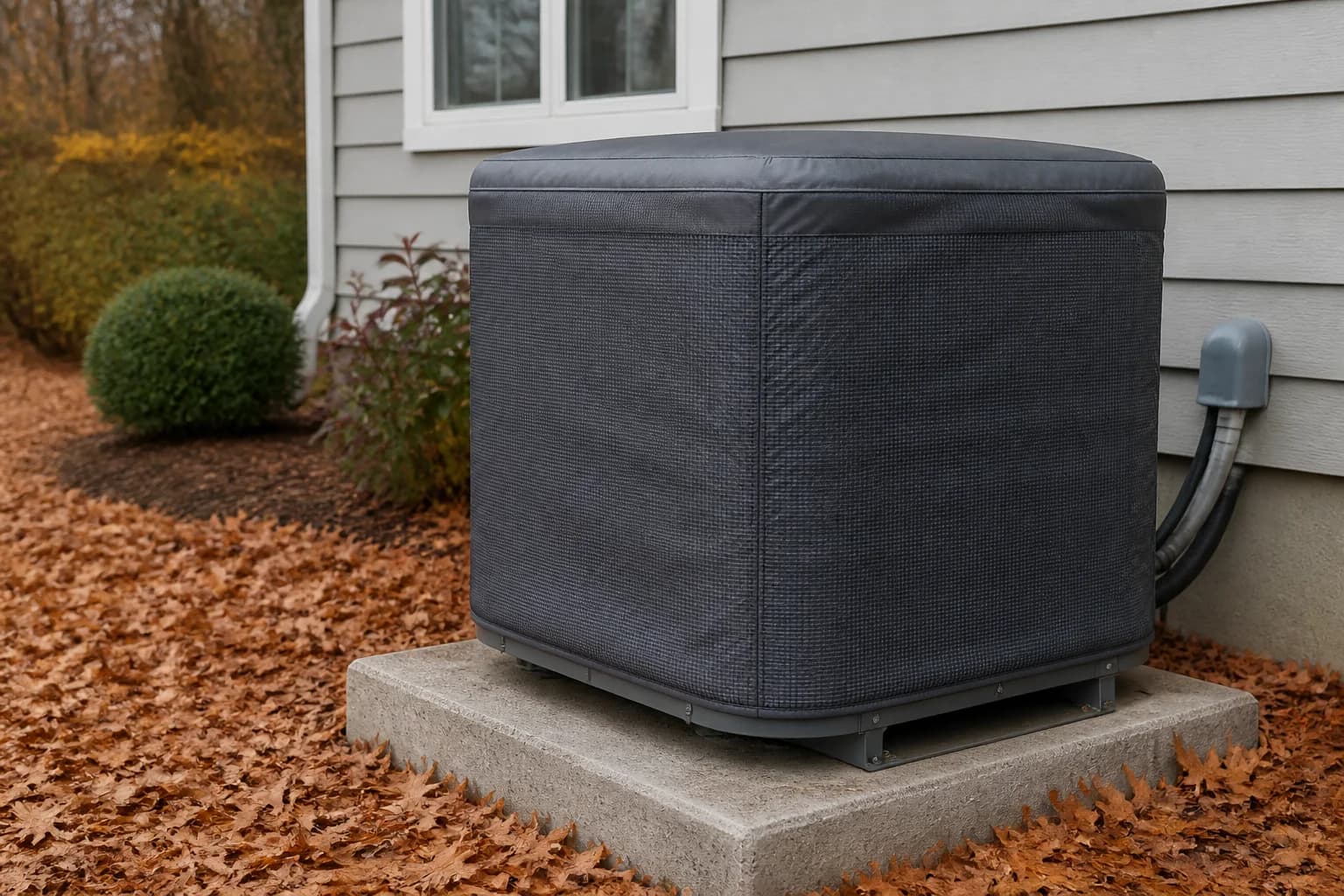
Most outdoor AC condensers do not need a full winter cover. A breathable top-only cover may keep out falling debris, but a sealed cover can trap moisture, attract pests, and contribute to corrosion.
Quick Answer
Usually, you should not fully cover your AC unit in winter. Outdoor condensers are built to withstand rain, snow, and cold, while a tight or non-breathable cover can trap moisture, encourage corrosion, and give rodents a sheltered nesting place. If falling leaves, acorns, or icicles are a concern, use a manufacturer-approved breathable cover or a securely fitted top-only cover. Never cover an operating heat pump, because it needs unrestricted airflow throughout the heating season.
The Short Verdict: Most AC Units Do Not Need A Full Winter Cover
The outdoor portion of a central air-conditioning system is designed to live outside. Its cabinet, coil, fan guard, and electrical enclosure are made to tolerate ordinary weather, including New Jersey rain, snow, wind, and freezing temperatures. Snow resting around a switched-off condenser is generally less concerning than moisture held against the cabinet for weeks by an airtight cover.
That does not mean every unit should be left completely unprotected in every location. A condenser installed beneath trees, a roof edge, or a spot where wind collects leaves may benefit from limited protection across the top. The useful distinction is between blocking falling debris and wrapping the entire cabinet. Always check the equipment manufacturer's instructions before adding a cover.
Why A Full Condenser Cover Can Cause Problems
A vinyl tarp or tightly fitted plastic condenser cover can reduce ventilation. Moisture from humidity, rain, melting snow, and condensation may then remain against metal surfaces instead of drying. Over a long winter, that damp environment can contribute to corrosion on the cabinet, coil, fasteners, and electrical components.
A full cover can also create a quiet shelter for mice and other small animals. Nesting material, chewed wiring, and debris around the fan or controls may lead to damage that is not discovered until the first warm day. Covers that loosen in coastal wind can rub against the cabinet and finish, while improvised tarps, cords, or weights can become hazards.
- Trapped moisture may promote rust and corrosion.
- Enclosed spaces can attract rodents and insects.
- Loose covers can flap, abrade finishes, or blow away.
- A forgotten cover can block airflow when cooling starts in spring.
When A Top-Only Or Breathable AC Cover May Help
Limited protection can make sense when the unit sits directly below deciduous trees or another source of falling leaves, seed pods, pine needles, or acorns. Organic debris can collect inside the fan opening, hold moisture, and restrict airflow the following season. A rigid top guard or fitted top-only condenser cover can deflect debris while leaving the cabinet sides open to breathe.
A manufacturer-approved, ventilated cover may also be appropriate for a particular model or installation. It should fit securely without blocking drainage or trapping moisture. If the condenser sits below an eave where falling ice could strike it, ask an HVAC professional about a purpose-built overhead shield that protects the equipment without resting on it or interfering with service clearances.
- Use only a product intended for the equipment and climate.
- Keep the sides open or ventilated unless the manufacturer directs otherwise.
- Secure the cover without drilling into or modifying the cabinet.
- Remove the cover before operating the air conditioner.
Heat Pump Winter Care Is Different: Do Not Cover It
An outdoor unit that provides heat in winter is a heat pump, not a seasonally idle AC condenser. It must pull outdoor air across the coil and discharge air through the fan while the heating system operates. Covering it, even partially, can restrict airflow, reduce performance, interfere with defrost operation, and potentially damage the equipment.
Keep leaves, drifting snow, and windblown debris away from a heat pump while preserving the clearances required by its manufacturer. After a storm, gently clear loose snow around the unit rather than chipping ice from the coil or using sharp tools. Steam, boiling water, and open flames can damage components and create safety risks. If the unit is encased in ice, makes unusual noise, or cannot complete a normal defrost cycle, turn to a qualified HVAC technician.
A Practical AC Winterization Checklist For New Jersey Homes
Good AC winterization is mostly inspection and housekeeping. Once the cooling season is over, remove leaves, grass clippings, and loose debris from around the condenser. Maintain the clearance stated in the owner's manual, trim nearby vegetation, and make sure roof drainage does not discharge onto the equipment. Do not bend coil fins or open electrical panels while cleaning around the cabinet.
Look from the ground for damaged insulation on the exposed refrigerant line, loose panels, corrosion, or a concrete pad that has shifted. Those conditions are better evaluated during fall HVAC maintenance than discovered during the first heat wave. In Ship Bottom, Long Beach Island, and other New Jersey Shore communities, salt exposure, windblown sand, coastal storms, and seasonal vacancy make an end-of-season visual check especially useful.
- Remove loose debris around and above the outdoor unit.
- Leave the manufacturer's required airflow and service clearance.
- Check visible line insulation, panels, wiring conduit, and the equipment pad.
- Use manufacturer-approved condensate drain-pan tablets when appropriate for the indoor equipment; never place them directly on the evaporator coil.
- Have the indoor and outdoor coils inspected yearly and cleaned as needed using methods appropriate for the equipment.
- Redirect gutter or roof runoff away from the condenser when appropriate.
- Schedule maintenance if you notice damage, heavy corrosion, or unusual operation.
Should You Shut Off Power To The AC For Winter?
Some homeowners switch off the outdoor AC disconnect or circuit breaker to prevent an accidental winter startup. However, certain systems use crankcase heaters or controls that may need power, and heat pumps must remain available for heating. The correct approach depends on the equipment design and the manufacturer's instructions.
Do not assume that every outdoor unit should be de-energized. Confirm whether the system is cooling-only or a heat pump, then follow its manual or ask your HVAC technician. If power has been off for an extended period, the manufacturer may require it to be restored for a set time before cooling begins.
Remove Any AC Cover Before The First Spring Startup
A covered condenser must be uncovered before the thermostat is set to cooling. Operating against a cover blocks heat transfer and airflow and can quickly stress the compressor and fan. A visible reminder at the thermostat or electrical panel can prevent an accidental startup during an unexpectedly warm spring day.
Before cooling season, inspect the outdoor cabinet for nests and debris, confirm that nothing obstructs the fan, and schedule AC maintenance if the system is due. A technician can inspect electrical components, clean the condenser coil as appropriate, check refrigerant-side performance, and identify winter damage before sustained hot weather arrives. Express provides HVAC maintenance across Ship Bottom, Long Beach Island, Ocean County, Monmouth County, Atlantic County, and nearby New Jersey communities.
Frequently Asked Questions
Should I Cover My AC Unit In Winter?
Usually, no full cover is needed. Outdoor AC condensers are designed for normal weather, and an airtight cover may trap moisture or shelter pests. Use a manufacturer-approved breathable or top-only cover only when falling debris or another site-specific hazard justifies it.
Can Snow Damage An Outdoor AC Condenser?
Normal snowfall usually does not harm a cooling-only condenser built for outdoor installation. Keep the area reasonably clear and address roof runoff, falling ice, deep drifting, or flood exposure that could physically damage or submerge the unit.
Can I Cover My Heat Pump During Winter?
No. A heat pump operates outdoors during the heating season and requires open airflow through its coil and fan. Keep snow and debris away without covering the unit or blocking the manufacturer's required clearances.
What Is The Best Type Of AC Winter Cover?
When protection is actually needed, a securely fitted top-only cover or a ventilated cover approved by the equipment manufacturer is generally preferable to an airtight wrap. It should shed falling debris while allowing ventilation and drainage.
Should I Put Plywood On Top Of My AC Unit?
Improvised plywood can shift in wind, add weight, trap debris, or damage the cabinet. Use a properly designed product or ask an HVAC professional about an overhead guard when falling ice or debris is a genuine concern.
When Should I Remove My Condenser Cover?
Remove it before anyone sets the thermostat to cooling. Leaving a cover on during operation blocks airflow and can damage the system, so add a reminder near the thermostat if there is any chance of an early warm-weather startup.