
Plumbing
Thanksgiving Plumbing Checklist: Prevent Clogged Drains and Hot-Water Problems
A few simple checks before the holiday meal can help prevent clogged kitchen drains, bathroom backups, and hot-water surprises. Learn what belongs in the trash, how to use a disposal carefully, and when to call a plumber.
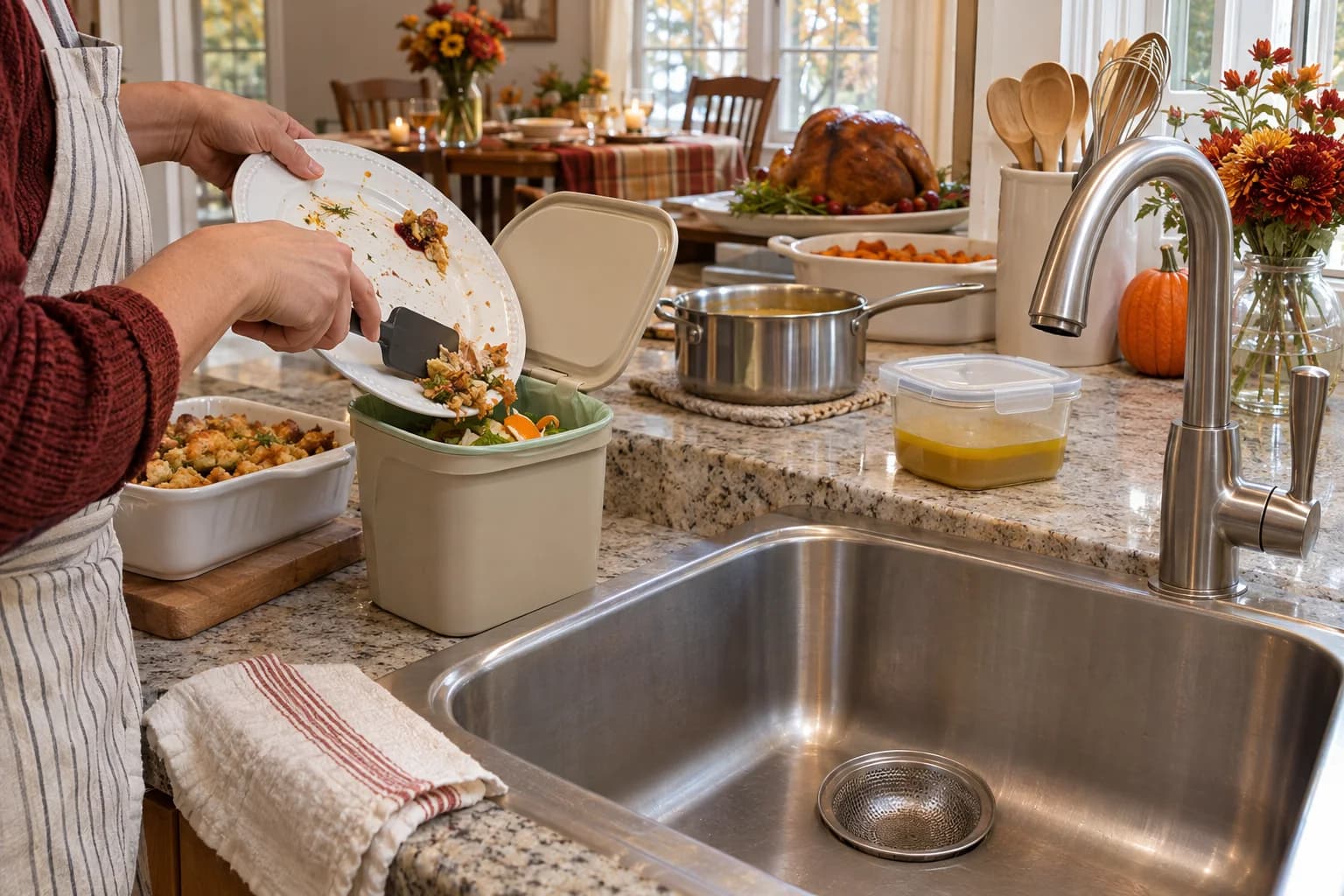
Scrape food scraps and cooking grease into the trash instead of rinsing them down the drain.
Quick Answer
Before Thanksgiving guests arrive, test the kitchen sink and guest bathroom, check accessible plumbing for leaks, and make sure everyone knows what not to flush or put down the drain. Let cooking grease cool in a container and throw it away; do not rely on hot water, dish soap, or a garbage disposal to keep grease from clogging pipes. Space out showers and other heavy hot-water uses if your heater has limited capacity. Stop using water and call a plumber if multiple fixtures back up, wastewater comes up through a drain, or a leak is spreading.
Thanksgiving Plumbing Checklist at a Glance
Holiday cooking and extra guests mean more activity at the kitchen sink, toilets, showers, and water heater. These quick checks can help catch a developing problem before the house fills up.
- Run the kitchen and bathroom sinks briefly and watch for slow drainage, gurgling, or leaks below the fixtures.
- Check that toilets flush normally; put a small trash bin in each bathroom for wipes and other products.
- Keep a drain strainer in the kitchen sink and a lidded container ready for cooking grease.
- Find the accessible shutoff valves for sinks and toilets, and know where the home's main water shutoff is.
- Spread out showers, laundry, and dishwashing if several people will need hot water around the same time.
Keep Grease and Food Scraps Out of the Drain
Turkey drippings, bacon fat, butter, cooking oil, gravy, and creamy sauces may be liquid while warm, but fats and grease cool and stick to pipe walls. Dish soap, hot tap water, and a garbage disposal do not prevent that buildup. Let grease cool, place it in a covered container, and discard it with household trash. Wipe greasy cookware with a paper towel before washing it.
Scrape plates, pots, and utensils into the trash or compost, and empty the sink strainer into the same container. The drain is not a good place for potato peels, bones, coffee grounds, rice, pasta, or fibrous vegetable scraps; follow the disposal manufacturer's instructions for any food waste your unit can handle.
Use the Garbage Disposal Carefully
A disposal grinds suitable food scraps into smaller pieces; it does not make grease or large amounts of food disappear from the plumbing system. Avoid putting cooking fats, bones, fibrous peels, or large quantities of scraps into it. Feed only items allowed by the unit's manual, in small amounts, and operate it as the manufacturer directs.
Never put your hand inside a disposal. If it stops, jams, or makes an unusual sound, switch it off and consult the manufacturer's instructions. Do not keep running it when the sink is holding water or backing up.
Prepare Guest Bathrooms
Only human waste and toilet paper should go into a toilet. Put wipes—including products labeled flushable—paper towels, tissues, dental floss, cotton products, and hygiene items in the trash. These materials can collect in household pipes and contribute to a blockage.
Test each guest toilet before visitors arrive. If one is already slow to drain or the water level is unusually high, do not keep flushing it. For a simple isolated clog, use the proper flange-style toilet plunger and stop if it does not improve.
Plan for Hot-Water Use
A full house may use more hot water than usual. Avoid starting laundry, running the dishwasher, and taking several long showers at the same time, especially if your home has a storage-tank heater with limited capacity. Give the heater time to recover between heavy draws.
Do not raise the water-heater temperature as a quick way to get more hot water. If hot water runs out unusually quickly, takes much longer than normal to recover, or the heater is leaking or making new noises, arrange a plumbing inspection rather than opening equipment panels or adjusting gas and electrical controls.
Know When to Stop and Call a Plumber
If a sink or toilet begins backing up, stop using that fixture. Avoid repeated flushing, running the disposal, or pouring chemical drain cleaner into the plumbing. Keep people away from wastewater and contact a plumber if the blockage does not clear with a safe, simple step.
A single slow fixture can have a local clog. When several fixtures drain slowly, a tub or shower gurgles while a toilet is used, or wastewater rises through a different drain, the issue may involve a shared drain line. A spreading leak, water around electrical equipment, or a ceiling stain also needs prompt attention.
A Calmer Holiday Starts With a Quick Check
Keep grease and scraps out of drains, use the disposal only as directed, give the water heater time to recover, and make sure guests know what should go in the trash. If you find a recurring clog, leak, or hot-water problem before the holiday, Express can help identify the plumbing service your New Jersey home needs.
Frequently Asked Questions
Can I pour turkey grease down the drain if I run hot water?
No. Grease can cool and stick to the inside of pipes even if hot water carries it down the drain temporarily. Let it cool in a container, then dispose of it in the trash.
Can I put Thanksgiving leftovers in the garbage disposal?
Do not put grease, bones, fibrous scraps, or large amounts of food into a disposal. Scrape plates into the trash or compost, and use the disposal only for small amounts of foods permitted by its manufacturer.
Are flushable wipes safe to flush when guests are visiting?
No. Even wipes labeled flushable may not break down like toilet paper and can contribute to pipe blockages. Put wipes, paper towels, tissues, and hygiene products in the trash.
How can I avoid running out of hot water with holiday guests?
Space out long showers and other heavy hot-water uses, such as laundry and dishwashing, so the heater has time to recover. If hot water runs out much sooner than usual, have the system checked instead of raising its temperature or opening the equipment.
When should I call a plumber for a holiday drain problem?
Call if multiple fixtures back up, wastewater comes up through another drain, a clog persists after a safe basic attempt, a leak is spreading, or hot-water performance changes significantly. Stop using affected fixtures while you arrange help.