
Plumbing
How to Properly Plunge a Toilet: A Step-by-Step Guide
A flange plunger, a good seal, and steady strokes are the keys to clearing many toilet clogs. Follow these steps, avoid common mistakes, and know when to stop and call a plumber.
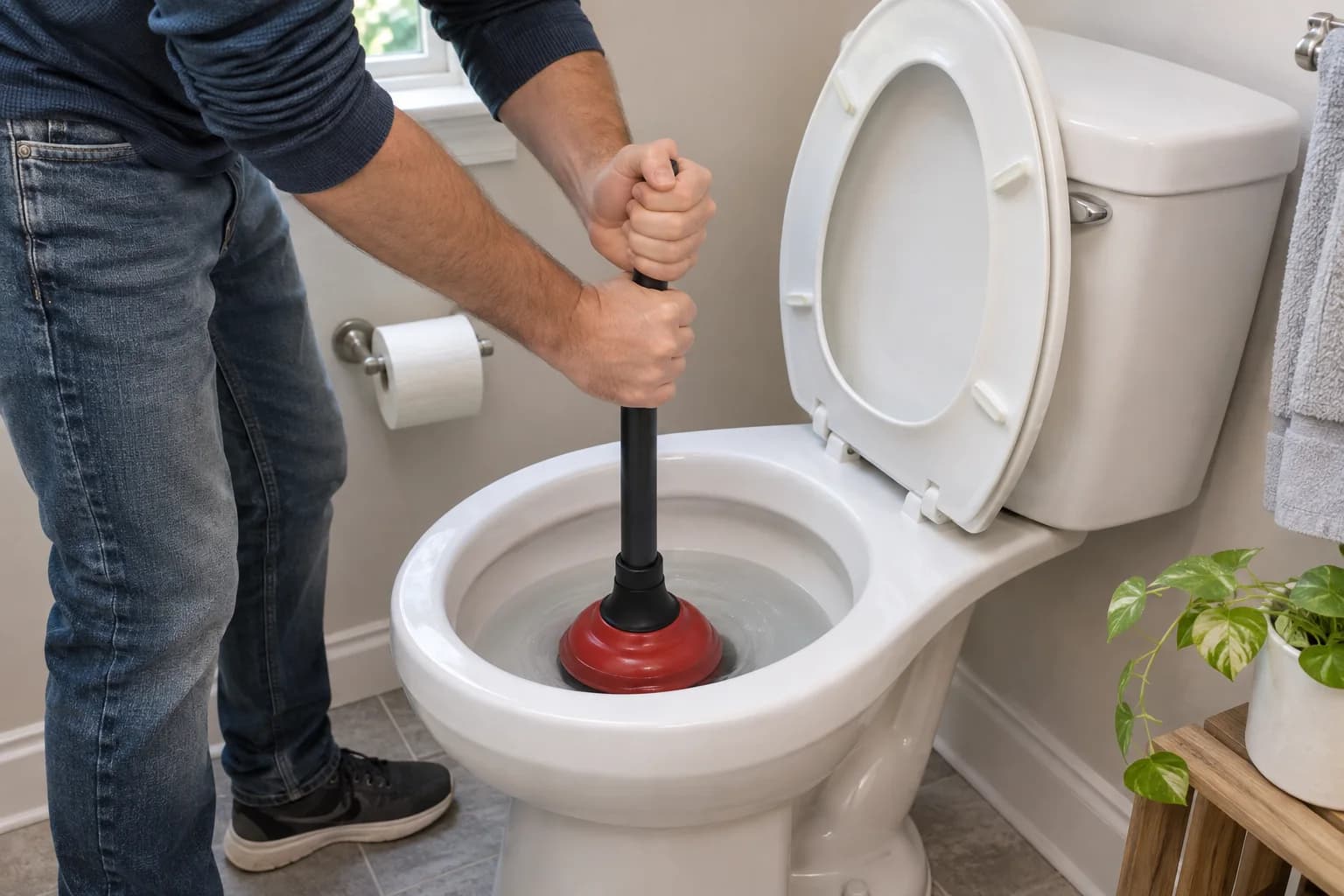
Illustrative image; use a toilet plunger with a flange that fits the bowl outlet.
Quick Answer
To properly plunge a toilet, use a toilet plunger with a flange, make sure the rubber cup is submerged, and press it firmly over the drain opening to form a seal. Start with a gentle push to remove trapped air, then use steady push-pull strokes without breaking the seal. After several strokes, lift the plunger and check whether the water drains. Do not keep flushing a toilet that is close to overflowing; stop and call a plumber if plunging does not clear the clog, several fixtures are backing up, or wastewater is coming up elsewhere.
Use the Right Plunger
A toilet plunger, often called a flange plunger, has a soft rubber cup with a narrow sleeve that folds out from the bottom. The sleeve fits into the toilet's drain opening and helps create a seal. A flat cup plunger is designed mainly for sinks and may not seal well against a toilet outlet.
Check that the rubber is flexible and the handle is secure. If you have only a flat cup plunger, it may not move enough water to clear a toilet clog. Do not force a tool that does not fit the bowl.
How to Plunge a Toilet Step by Step
Protect the floor with towels and put on household cleaning gloves. If the bowl is nearly full, do not add water or flush again. Wait briefly for the level to fall, or remove some water into a bucket so the bowl will not spill when you work. Keep the bucket away from children and pets and clean and disinfect the area afterward.
Set the plunger's flange into the drain opening and tilt the cup so it fills with water. Water in the cup helps avoid trapping air and improves the seal. Center the cup over the outlet and press down gently until the rim seals against the porcelain.
Begin with a slow, gentle push to push out air without splashing. Then move the handle up and down with controlled, firm strokes while keeping the cup sealed over the opening. The goal is to move water back and forth through the trap, not to jab the bowl or strike the porcelain. Continue for about 15 to 20 strokes, then pull the plunger up to release the seal.
If the water drains, wait until the bowl returns to its normal level. Flush once to check that it clears normally, and be ready to stop the flush if the water rises instead of falling. If the bowl remains clogged, you can repeat the plunging cycle once or twice. If there is no improvement, stop rather than risking an overflow or damaging the toilet.
- Keep the plunger cup submerged and sealed over the drain.
- Use controlled strokes and avoid splashing or hitting the bowl.
- Flush only after the water level has fallen and the clog appears to have cleared.
What Not to Do When a Toilet Is Clogged
Do not repeatedly flush a toilet that is clogged or close to overflowing. A second flush can send more water into a bowl that has nowhere to drain. If the bowl starts rising, remove the tank lid and close the toilet's flapper only if you can do so safely, then turn the small shutoff valve behind or beside the toilet clockwise if it is accessible and turns easily. Do not force a stuck valve.
Avoid chemical drain cleaners in a toilet. They can splash back during plunging and may expose you or a plumber to caustic liquid. Do not pour boiling water into the bowl; sudden heat can crack porcelain. If you use a toilet auger, follow its instructions and avoid scraping or forcing the tool against the bowl.
When to Stop and Call a Plumber
A toilet that remains blocked after careful plunging may have a deeper obstruction, an object caught in the trap, or a problem in the drain line. Stop if the plunger does not improve drainage after a few cycles, if you suspect a solid object was flushed, or if the toilet begins leaking at its base.
Call for plumbing help promptly if more than one toilet or drain backs up, a tub or shower gurgles when the toilet is flushed, wastewater comes up through another fixture, or the clog returns repeatedly. Those signs can point to a shared drain or sewer issue that a plunger cannot resolve.
Keep the Plunger Clean
After the clog clears, rinse the plunger in clean toilet water if possible, then disinfect it according to the cleaner's label. Do not mix cleaning products. Let the plunger dry before storing it in a holder that can contain drips, and wash your hands after cleanup.
Get Help With a Toilet or Drain Clog
If a toilet clog will not clear with careful plunging, or other fixtures are backing up too, share which fixtures are affected and when the problem began. Express provides plumbing repair service for New Jersey homeowners and can discuss the right next step for your home's drain or toilet.
Frequently Asked Questions
What kind of plunger should I use for a toilet?
Use a toilet plunger with a flange: a soft rubber sleeve that folds out from the cup and fits into the toilet drain opening. A flat cup plunger is generally intended for sinks and may not form a reliable seal in a toilet.
Should the toilet plunger be covered with water?
Yes. The rubber cup should be submerged enough to fill with water and seal around the drain opening. If the bowl is close to overflowing, do not add water; wait for the level to fall or carefully remove some first.
How many times should I plunge a clogged toilet?
Start with a gentle push to remove air, then use about 15 to 20 controlled push-pull strokes while keeping the seal. Check whether the water drains and repeat once or twice if there is improvement. Stop if the clog does not respond.
Should I flush after plunging?
Only flush once the water level has fallen and the clog appears cleared. If the bowl is still full or rising, do not flush because it could overflow.
When should I call a plumber for a clogged toilet?
Call if careful plunging does not clear the clog, the toilet keeps clogging, more than one fixture backs up, a tub or shower gurgles, wastewater comes up elsewhere, or the toilet leaks around its base.
Can I use chemical drain cleaner in a toilet?
Avoid chemical drain cleaners in a toilet. They can splash during plunging and may create a chemical exposure risk for you or a plumber.