
Plumbing
Tank vs. Tankless Water Heater: Which Is Better for a Shore Home?
A tankless unit saves space and avoids storing hot water, while a conventional tank can be simpler to size and replace. For a shore home, household demand, fuel, venting, and winter plans matter more than the label.
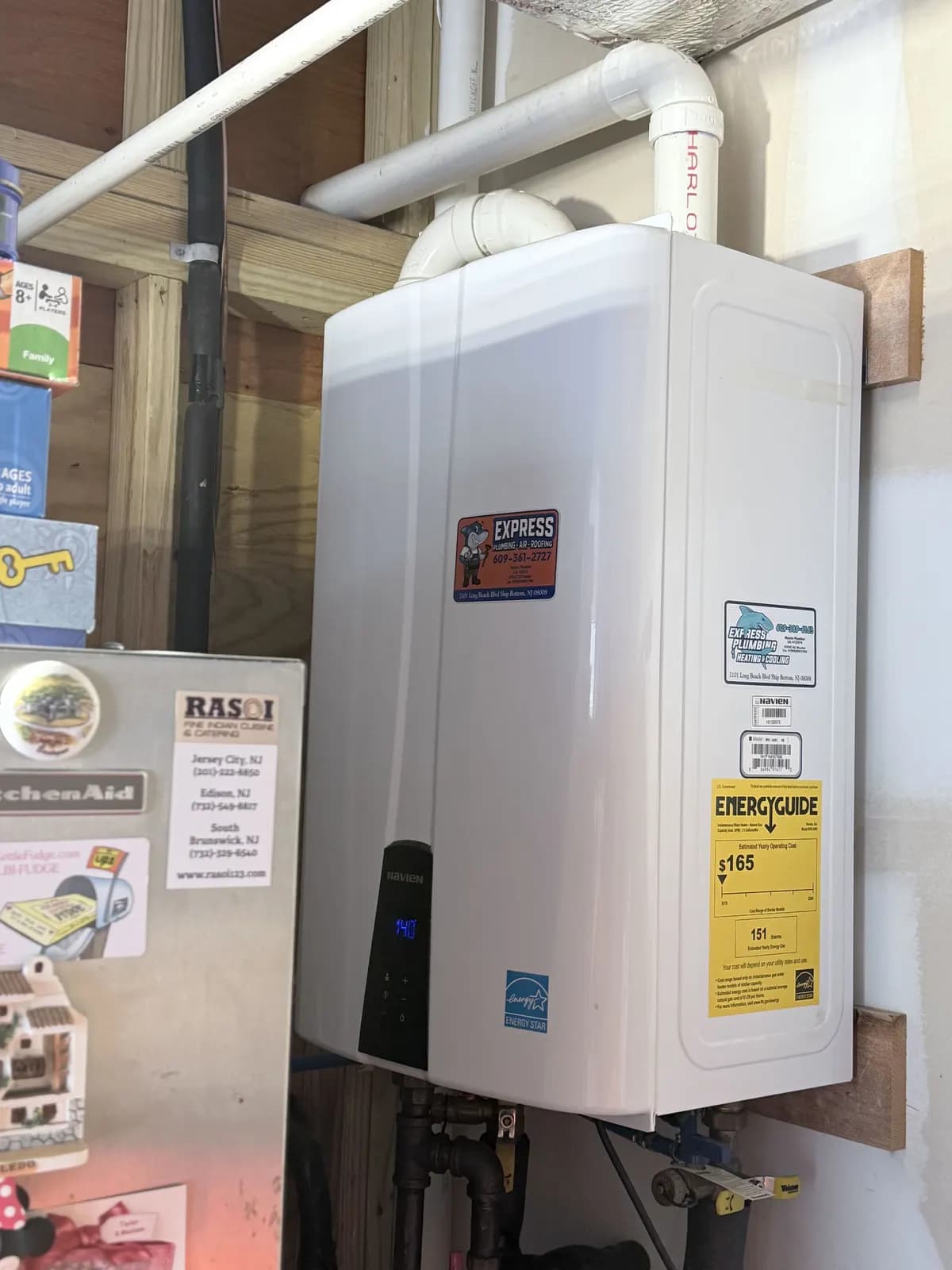
A tankless water heater installation completed by Express Plumbing.
Quick Answer
Neither a tank nor a tankless water heater is automatically best for every New Jersey shore home. A storage tank keeps a reserve of hot water and is often a straightforward like-for-like replacement. A tankless unit heats water as it flows, can reduce standby heat loss, and takes less floor space, but it must be sized for the home's peak simultaneous flow and winter inlet-water temperature. Its installation may require changes to gas capacity, venting, condensate drainage, electrical service, or water treatment. For a seasonal home, include the manufacturer's freeze-protection and winter-shutdown instructions in the decision. Compare the full installed scope, household demand, fuel, and vacancy plan before choosing.
The Short Answer: Match the Heater to How the Home Is Used
A conventional tank and a tankless water heater solve the same problem in different ways. A tank stores a ready supply of heated water. A tankless unit heats water as fixtures call for it. Neither technology is a universal upgrade, and “tankless” by itself does not tell you whether a unit will keep up with your family, fit the existing utility room, or be economical to install.
For a New Jersey shore home, start with the people who use it, the number of showers and appliances likely to run at once, the fuel and venting already available, and whether the property sits vacant during cold weather. Then compare equipment and installation proposals with the same assumptions.
How a Storage-Tank Water Heater Works
A storage heater warms water in an insulated tank and keeps it available until a faucet, shower, or appliance calls for hot water. The tank’s capacity is the stored reserve; the burner or electric elements then recover heat as water is drawn and replaced with cold water.
That reserve can be useful when several fixtures have short, overlapping demands. Once the stored hot water is used, however, the household may need to wait for the heater to recover. The unit also uses some energy to replace heat that gradually escapes from the stored water, even when no fixture is running.
A tank replacement may be relatively simple when the new model uses compatible fuel, connections, location, and venting. It still needs correct sizing, code-compliant installation, and evaluation of the existing piping and safety components; a similar-looking replacement is not a reason to skip those checks.
- Can provide a stored reserve for brief periods of overlapping use.
- Capacity and recovery rate both affect how quickly hot water runs out and returns.
- Usually occupies more floor space than a wall-mounted tankless unit.
- Loses some heat while hot water is stored.
How a Tankless Water Heater Works
A tankless unit senses water flow and heats water as it passes through the heat exchanger. Because it does not keep a large tank of water hot between uses, it can avoid much of the standby heat loss associated with storage. It is also compact and wall mounted, which may free up utility-room floor space.
“On demand” does not mean unlimited hot water at any flow rate. The heater has a maximum heating capacity. Its output depends on how many gallons per minute are being used and how much the incoming water must be heated. In winter, colder incoming water can reduce the flow rate at which the unit can deliver the desired temperature. If multiple showers and appliances run together, an undersized unit may deliver less hot water or a lower temperature than expected.
Tankless installation can involve more than swapping the appliance. Depending on the model and home, a plumber may need to evaluate gas-pipe capacity, venting, combustion air, a condensate drain for a condensing model, electrical supply, water quality, and the manufacturer's required clearances. Those items affect both feasibility and installed cost.
- Heats water as it flows rather than maintaining a full hot-water tank.
- Must be sized for simultaneous demand and the required temperature rise.
- May need compatible venting, fuel capacity, electrical connections, and condensate disposal.
- Uses less space, but service access and manufacturer clearances still matter.
Tank vs. Tankless: What to Compare
Compare the complete installed options, not just the equipment price or a general claim about efficiency. ENERGY STAR recommends sizing a tankless heater based on the fixtures expected to run at the same time and the temperature rise required. A professional estimate should show how the proposed model meets your home's actual demand and identify any work needed to support it.
Operating cost also depends on the energy source and price, hot-water use, equipment efficiency, installation, and maintenance. A tankless model may reduce standby losses, but that alone does not guarantee it will cost less overall for a particular household. Ask for the assumptions behind any projected savings and compare them with the added installation costs, if any.
- Hot-water demand: how many showers, sinks, and appliances may operate at once?
- Winter temperature rise: how cold is incoming water, and what delivery temperature do you need?
- Fuel and utility capacity: can the existing gas line or electrical service support the proposed model?
- Venting and drainage: will the installation need new venting or a condensate drain?
- Installed cost: what equipment, piping, venting, permits, and other work are included?
- Maintenance: what cleaning, flushing, or inspection does the exact model require?
- Warranty and service: what is covered, and who can maintain the unit locally?
What Matters Specifically in a Shore Home
A shore property may be used by a small household for much of the year, then host a full house of family or guests on a busy weekend. Size the heater for the way the home is actually occupied—not just its bedroom count or the number of bathrooms. At the same time, do not size a system around an unrealistic assumption that every fixture runs at once; list the likely peak uses and have the installer check them.
Seasonal vacancy deserves its own discussion. A tankless heater is not automatically protected from freezing just because it stores little water: water remains in its internal passages and connected piping, and some freeze-protection features depend on electricity. A storage heater and the plumbing around it also need a plan when a building is left unheated. Follow the exact equipment manual and the home's winterization instructions; do not assume turning off a breaker, gas supply, or water valve is sufficient for every model or property.
If the house will be closed up during freezing weather, ask the plumber to explain the appropriate shutdown or freeze-protection procedure for the specific heater and plumbing layout. Keep the written instructions with the property information for whoever opens, checks, or closes the home.
Maintenance and Service Life: Follow the Exact Model
Both types need maintenance. A storage tank may collect sediment, and its maintenance needs depend on water conditions, heater design, and manufacturer instructions. Tankless models may require periodic flushing or descaling, particularly where mineral content and usage make scale a concern. Some tankless units also have filters or other service items that should be checked as directed by the manufacturer.
There is no one maintenance interval that fits every water heater. Use the model's manual and ask the installing plumber to show you the service points and explain what work is appropriate. If the heater leaks, makes unusual noises, repeatedly shuts down, or cannot supply normal hot water, arrange an inspection rather than assuming age or sediment is the only cause.
Questions to Ask Before You Choose
Ask each installer to put the reasoning and included work in writing. That makes it easier to compare a tank replacement with a tankless conversion and to spot a quote that leaves out necessary supporting work.
- What peak hot-water flow and winter temperature rise did you use to size this model?
- Can it serve our likely simultaneous showers and appliances without an unacceptable temperature drop?
- Does the existing gas line, electrical service, venting, and drain meet this model's requirements?
- What added work is included in the price, and what could change after the existing unit is removed?
- What maintenance does this exact model require, and what does its warranty require?
- What written steps should we follow when the shore home is vacant during freezing weather?
- What permits or inspections apply to this replacement in our municipality?
So, Which Is Better for Your Shore Home?
A storage tank may suit a home where a reserve of hot water, straightforward replacement, or lower conversion complexity is the priority. A tankless unit may suit a household that values compact equipment and on-demand heating, provided it is properly sized and the home can support its fuel, venting, drainage, and electrical requirements.
The better choice is the one that reliably meets your peak demand, fits the home's utility setup, works with its winter vacancy plan, and makes sense at the full installed cost. Express can inspect a water heater, explain repair or replacement options, and provide a plumbing estimate based on the existing system and the home's needs.
Frequently Asked Questions
Is a tank or tankless water heater better for a shore home?
Neither is automatically better. Compare the home's peak hot-water demand, winter inlet-water temperature, fuel and venting, total installation scope, maintenance, and the plan for protecting the plumbing while the property is vacant.
Does a tankless water heater provide unlimited hot water?
No. It heats water as it flows, but each model has a maximum output. If simultaneous demand exceeds its capacity—or incoming water is especially cold—it may not deliver the expected flow at the desired temperature.
Will a tankless water heater lower my energy bills?
It can reduce standby heat loss compared with storing hot water, but actual operating cost depends on the model, fuel prices, household use, installation cost, and maintenance. Compare estimates using your home's usage instead of assuming savings.
Is tankless safe for a shore house that sits vacant in winter?
It can be used in a seasonal home, but the heater and connected pipes still need protection from freezing. Some freeze-protection features require power. Follow the exact manufacturer's instructions and arrange a plumbing shutdown or winterization plan suited to the home.
Can a tankless heater replace my old tank without other changes?
Not always. A tankless conversion may require changes to gas capacity, venting, electrical service, condensate drainage, or other connections. Have a plumber check the proposed model and the existing installation before comparing prices.
How do I know what size tankless water heater I need?
Sizing depends on the hot-water flow needed when fixtures run together and the temperature rise from incoming water to the set delivery temperature. An installer should calculate both for your home, including colder winter inlet water.