Heating
Furnace Maintenance Checklist: What New Jersey Homeowners Should Do Before Winter
A fall furnace check should cover the filter, thermostat, airflow, burners, electrical components, safety controls, heat exchanger, and venting. Here is what homeowners can check and what requires a professional.
Quick Answer
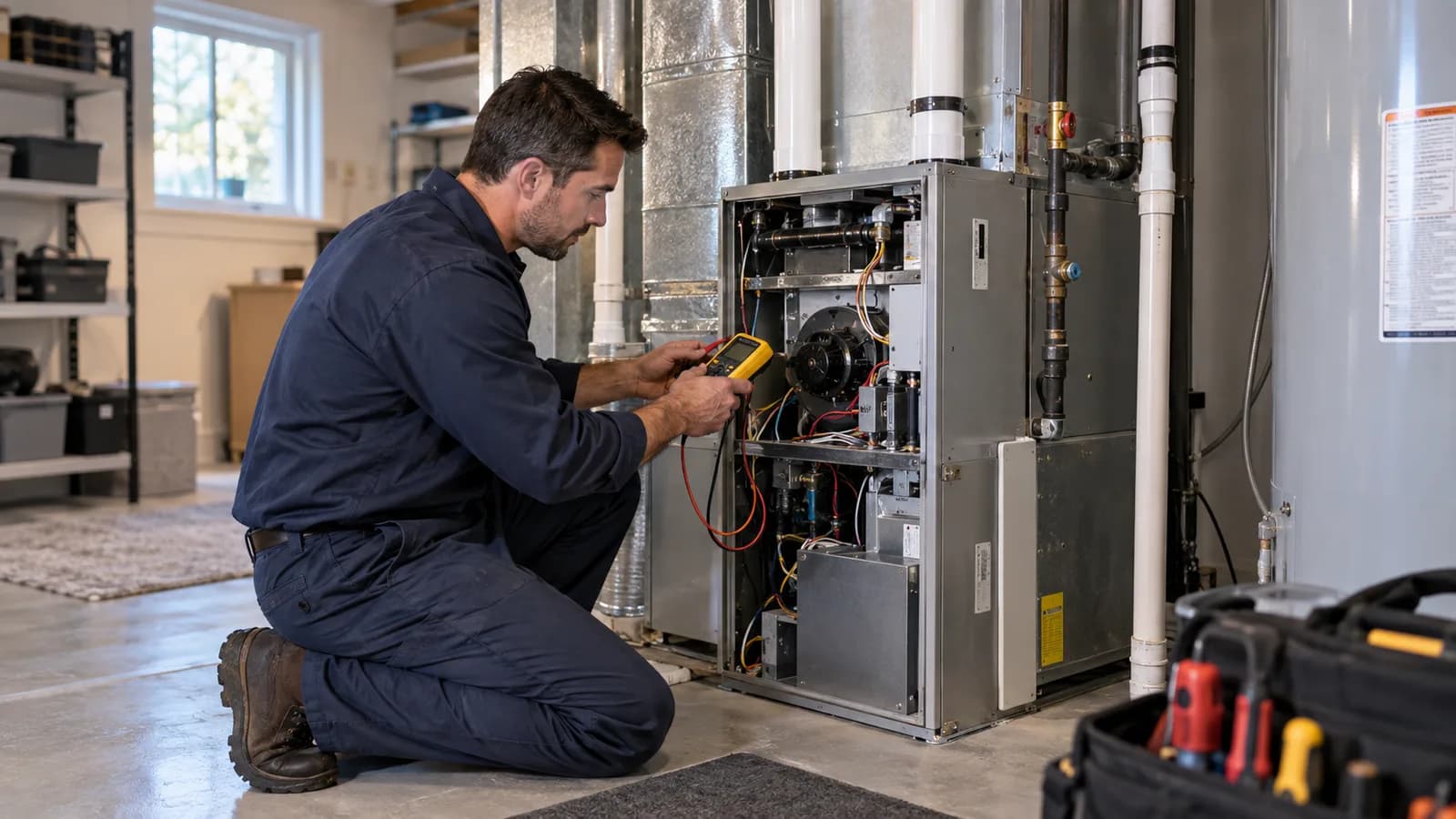
Before winter, install the correct clean filter, clear supply and return vents, test smoke and carbon monoxide alarms, remove stored items from around the furnace, and run one complete heating cycle while you are home. A professional furnace tune-up should also check thermostat operation, airflow, electrical connections, ignition and burners, safety controls, the heat exchanger, and the venting path. Fuel-burning heating equipment should be professionally inspected every year.
The Homeowner's Pre-Winter Furnace Checklist
Start before the first genuinely cold night. A supervised test in early fall gives you time to notice a weak startup, unusual sound, short cycling, or airflow problem before the heating schedule fills up. Follow the furnace manufacturer's instructions and stop at the equipment panels: combustion, gas, oil, electrical, and internal safety work requires the right training and instruments.
Use this list for the items a homeowner can usually inspect without opening the furnace or changing system settings beyond normal thermostat operation. If anything looks damaged, smells unusual, or does not operate normally, turn the system off and arrange service.
- Confirm the thermostat is set to heat, then raise the setting enough to call for one normal heating cycle.
- Check the filter and replace or clean it only as directed by the furnace and filter manufacturers.
- Open supply registers and make sure return grilles are not blocked by rugs, furniture, or stored items.
- Clear boxes, paper, paint, cleaners, and other combustibles away from the furnace and venting.
- Look from outside the cabinet for water, corrosion, loose venting, soot, damaged wiring, or an obstructed intake or exhaust.
- Test smoke and carbon monoxide alarms according to their manufacturers' instructions.
- Listen through startup, heating, blower operation, and shutdown for new banging, grinding, buzzing, or repeated restarts.
What Should A Professional Furnace Tune-Up Include?
A furnace tune-up is more than changing the filter and watching the unit turn on. ENERGY STAR's maintenance checklist calls for checking thermostat settings, electrical connections, system controls, the starting cycle, and heating-specific fuel connections, burner combustion, and the heat exchanger. The work should be appropriate to the equipment in the home and the manufacturer's instructions.
Ask what the visit covers before scheduling. A qualified technician may need to inspect, clean, test, or measure different components based on whether the system is a gas furnace, oil furnace, boiler, or heat pump. Maintenance findings should be explained separately from any recommended repair.
- Thermostat response and a complete start-run-stop sequence
- Filter condition, blower components, and system airflow
- Electrical connections, motors, and accessible wiring
- Ignition system, burners, flame characteristics, and fuel connections where applicable
- Operating and safety controls
- Heat exchanger condition and signs that require further evaluation
- Flue, vent connector, intake, exhaust, chimney, or other applicable venting path
- Condensate drainage on high-efficiency furnaces and compatible equipment
Check The Furnace Filter Without Guessing
A dirty filter can slow airflow and make the heating system work harder. ENERGY STAR recommends checking the filter monthly during heavy-use seasons and replacing it when dirty, with at least a three-month interval as a general minimum. The equipment and filter manufacturers' instructions take priority because homes, filters, pets, renovations, and system designs differ.
Match the filter's dimensions and approved airflow characteristics. Do not assume that the highest available MERV rating is automatically best for an existing furnace. A filter that is too restrictive for the blower and duct system can create an airflow problem. If a new filter becomes dark unusually fast, bends inward, whistles, or does not fit securely, have the system evaluated instead of repeatedly trying different filters.
Test The Thermostat And One Complete Heating Cycle
Set the thermostat to heat and choose a temperature above the current room reading. Observe the system without removing panels. The furnace should begin its normal ignition sequence, the blower should start after the appropriate delay, warm air should reach the registers, and the system should shut down after satisfying the thermostat.
Repeated starts, very short cycles, a blower that never stops, cold air from the registers, a tripped breaker, or a thermostat that loses power are reasons to schedule diagnosis. Do not keep raising the temperature or resetting a breaker to force the furnace to run. A thermostat problem, airflow restriction, ignition fault, limit trip, electrical issue, or other condition can produce similar symptoms.
Combustion, Heat Exchangers, And Venting Need Professional Attention
Fuel-burning equipment must move combustion gases safely out of the home. The U.S. Consumer Product Safety Commission recommends annual professional inspection of fuel-burning heating systems and says the inspection should include chimneys and flues for blockages, corrosion, disconnections, and loose connections. Those checks cannot be replaced by looking at the thermostat or changing a filter.
A technician should evaluate the fuel connections, burner operation, ignition components, heat exchanger, safety controls, and applicable venting. Homeowners should not try to clean burners, adjust gas pressure, defeat a door switch, patch venting, or diagnose a heat exchanger with a flashlight alone. If a carbon monoxide alarm sounds, leave the home and follow the alarm manufacturer's emergency instructions; do not wait for a routine maintenance appointment.
Carbon Monoxide Has No Smell
A furnace can have a mechanical or combustion problem without producing an odor that warns you. Carbon monoxide is colorless and odorless. New Jersey's Department of Health advises residents with fuel-burning appliances to keep carbon monoxide alarms installed and working and to have gas-powered household heaters inspected and maintained annually by a qualified licensed professional.
Test alarms as their manufacturers direct and replace the alarm or its power source on the specified schedule. A smoke alarm is not a substitute for a carbon monoxide alarm. Headache, dizziness, nausea, weakness, confusion, or unusual fatigue can be symptoms of exposure; move outside and call emergency services rather than trying to inspect the furnace yourself.
A Furnace Checklist Does Not Cover Every Heating System
Many New Jersey homes use boilers, heat pumps, dual-fuel systems, or ductless equipment instead of—or alongside—a forced-air furnace. The goal is still preseason reliability, but the inspection points change. A boiler involves water pressure, circulation, controls, venting, and visible leakage. A heat pump relies on indoor and outdoor equipment, refrigerant-side operation, defrost controls, airflow, and unobstructed outdoor clearance.
Tell the contractor exactly what equipment serves the home and whether it also provides cooling or domestic hot water. This matters on Long Beach Island and in other seasonal homes where equipment may have been idle, utility settings may have changed, or remote thermostat schedules may need review before the property is left unattended.
When Maintenance Becomes A Repair Visit
Maintenance can uncover a problem, but it cannot guarantee that a component will not fail later. If the furnace already has symptoms, describe them when you schedule so the appointment can be treated as diagnosis rather than a routine tune-up. Useful details include when the problem started, whether it happens every cycle, which rooms are affected, and whether the thermostat or furnace displays an error code.
Request prompt heating repair when the furnace will not start, repeatedly shuts down, trips a breaker, produces smoke or a strong electrical or fuel odor, makes a new grinding or banging sound, or fails to heat the home evenly. Leave immediately and call 911 and the gas utility from outside if you suspect a gas leak. Call emergency services if a carbon monoxide alarm sounds or anyone may be experiencing exposure symptoms.
When Should New Jersey Homeowners Schedule Furnace Maintenance?
Fall is the practical time for heating maintenance because the equipment can be checked before sustained winter use and before the first no-heat rush. ENERGY STAR recommends an annual preseason check-up and specifically suggests checking heating equipment in the fall. If the season has already started, it is still worthwhile to schedule rather than waiting another year.
Express provides furnace and heater maintenance in Ship Bottom, across Long Beach Island, and throughout Ocean, Monmouth, and Atlantic counties. A preseason visit can establish the condition of the system, identify repairs that need a separate decision, and help you enter winter with a clear plan instead of assumptions.
Frequently Asked Questions
Does A Furnace Need Maintenance Every Year?
ENERGY STAR and the U.S. Consumer Product Safety Commission recommend annual professional inspection or preseason maintenance for heating equipment, especially fuel-burning systems. The equipment manufacturer's maintenance requirements also matter for safe operation and warranty terms.
What Is Included In A Furnace Tune-Up?
A professional tune-up commonly checks thermostat operation, airflow, the filter and blower, electrical connections, the ignition and burners, safety controls, the heat exchanger, and the applicable venting path. The exact work depends on the furnace type, condition, and manufacturer's instructions.
Can I Perform Furnace Maintenance Myself?
Homeowners can usually check the filter, clear vents and the area around the furnace, test alarms, and observe one normal cycle. Fuel, combustion, electrical, heat-exchanger, safety-control, and venting work should be handled by a qualified professional.
When Is The Best Time To Schedule Furnace Maintenance In New Jersey?
Early fall is ideal because the furnace can be tested before sustained cold weather and before heating contractors reach their busiest period. If fall has already begun, schedule the inspection rather than skipping the year.
Will A Furnace Tune-Up Prevent Every Breakdown?
No. Maintenance can identify wear, unsafe conditions, airflow problems, and components that need attention, but it cannot guarantee that no future failure will occur. It gives the homeowner better information and a chance to address findings before heavier winter use.
How Often Should I Change My Furnace Filter?
Inspect it monthly during heavy heating use and replace or clean it when dirty, following the furnace and filter manufacturers' instructions. Filter type, pets, household activity, renovations, and system design can all change the appropriate interval.
Is Furnace Maintenance The Same As Heating Repair?
No. Maintenance is preventive inspection and service for equipment that is generally operating. A furnace that will not start, shuts down repeatedly, trips a breaker, smells strongly of fuel or overheated wiring, or produces abnormal noise needs diagnosis and possibly repair.