
Roof Repair
Roof Repair vs. Replacement: How to Tell Which One You Need
A leak or missing shingle does not automatically mean you need a new roof. The right choice depends on where the problem is, how far it extends, and whether the surrounding roof can still perform.
Quick Answer
Roof repair usually makes sense when damage is isolated, the surrounding shingles and roof system remain serviceable, the decking is sound, and a durable material match is available. Replacement becomes more reasonable when deterioration is widespread, leaks keep returning in different areas, the roof deck or structure is compromised, or repeated repairs would only postpone a larger failure. Roof age matters, but it is not a diagnosis. A roof inspection should document the source, extent, surrounding condition, repair history, and expected value of each option before anyone recommends repair or replacement.
Do Not Let One Leak Make The Decision For You
A ceiling stain, a few missing shingles, or granules in a gutter can start an urgent conversation, but none of those observations proves by itself that the entire roof needs to be replaced. Water can enter through a small flashing defect on an otherwise serviceable roof. It can also appear at one ceiling location after traveling from widespread deterioration several feet away. The visible symptom and the actual scope are not always the same.
The useful question is not simply, ‘Can this spot be patched?’ It is whether a focused repair can restore a reliable drainage path and integrate with the surrounding roof. If the repair would be attached to brittle, failing, repeatedly repaired, or structurally compromised materials, replacement may provide the more responsible long-term answer. The recommendation should follow the evidence—not the size of the sales opportunity.
1. Is The Damage Localized Or Widespread?
Localized damage points more naturally toward repair. Examples may include a small wind-damaged shingle area, one failed pipe boot, a discrete flashing problem, or damage caused by a branch in a defined location. A professional still needs to confirm that adjacent shingles can be lifted and reworked without breaking and that the underlayment and decking beneath the area remain suitable.
Widespread curling, cracking, granule loss, open seams, displaced shingles across multiple slopes, or failure around several penetrations changes the calculation. Replacing one visible trouble spot cannot renew the surrounding material. GAF’s homeowner guidance similarly distinguishes small, localized damage from significant or broad problems when discussing repair versus replacement.
2. What Is The Condition Of The Roof Around The Problem?
A repair depends on more than the damaged piece. The surrounding shingles must be flexible enough to work with, fasteners need secure material beneath them, flashing transitions must be rebuildable, and water must still have a continuous path off the roof. A neat-looking patch is not a durable repair if it ties into material that is already splitting or losing adhesion.
Look at the roof as a system: roof deck, underlayment, leak barriers where used, flashing, shingles, ventilation, penetrations, edges, and drainage. If most of that system remains in good condition, a focused repair may preserve useful service life. When deterioration crosses several components or slopes, a replacement evaluation can address the system instead of chasing its weakest visible point.
3. Is This The First Leak Or Part Of A Pattern?
One repairable leak is different from several leaks that have appeared in unrelated locations. Review invoices, inspection photographs, storm records, warranty documents, and any repairs made before you owned the house. Mark where interior stains appeared and whether they returned after work was completed. A repeated leak in one location may indicate that the original source was missed; new leaks across multiple areas may point to broader decline.
Repair history matters because each patch changes the next repair. Layers of roofing cement, incompatible sealants, multiple shingle colors, and several prior attempts around the same chimney or skylight can make another small intervention less predictable. A good proposal should explain whether the new work corrects the assembly or merely adds another surface patch.
4. Are The Roof Deck Or Structural Components Affected?
Soft, decayed, delaminated, or sagging roof decking requires more than replacing the shingle visible above it. The affected roofing must be opened so damaged decking can be evaluated and replaced as needed. Localized deck damage can sometimes be included in a focused repair, but extensive deterioration across the roof may support replacement because large areas must be opened anyway.
Visible sagging, a changing roof line, cracked framing, or a bulging ceiling deserves prompt professional attention. Keep people away from a questionable area and do not climb onto the roof. A roofer can document roofing and decking conditions; suspected structural movement may also require evaluation by an appropriately qualified building professional or engineer.
5. Can The Existing Roofing Be Repaired And Matched Reliably?
Even when the damaged area is small, the existing product may be brittle, discontinued, layered incorrectly, or difficult to match. Color variation alone is usually cosmetic, but an unavailable profile, incompatible exposure, or shingles that crack when lifted can affect whether the repair can be integrated correctly. Ask whether the proposed material is technically compatible—not only whether the color looks close from the street.
Also ask how the repair will connect to flashing, underlayment, valleys, roof edges, and nearby penetrations. The objective is to rebuild the water-shedding detail, not cover it. If a contractor cannot explain what will be removed, inspected, replaced, and tied back into the roof, the scope is not yet clear enough.
6. How Old Is The Roof—And How Has It Actually Performed?
Roof age helps establish context, but no universal birthday forces every roof into replacement. Material type, original installation, attic heat and moisture, ventilation, sun exposure, maintenance, storm history, roof geometry, and coastal weather all influence condition. A younger roof can fail early after poor installation or severe damage; an older roof may remain serviceable when it was installed well and has limited deterioration.
If you do not know the installation date, check closing documents, permits, invoices, warranty registrations, inspection reports, and prior-owner records. A professional may estimate an age range from materials and wear, but the present condition should carry more weight than a guessed date. Use age together with documented damage, repair history, and remaining-system condition.
7. Which Option Delivers Better Value Over The Time You Need?
Compare the full scopes rather than the bottom-line prices alone. A repair estimate should identify the source being addressed, the area being opened, materials being replaced, treatment of decking and flashing, workmanship coverage, and what remains unchanged. A replacement estimate should state tear-off assumptions, decking allowances, underlayment, flashing, ventilation, shingles, disposal, property protection, warranty options, and exclusions.
There is no trustworthy one-size-fits-all percentage that decides every roof. A smaller repair can be sensible when it is durable and preserves meaningful service life. A larger repair can be poor value when nearby areas are likely to fail soon. Consider how long you expect to own the home, whether it will sit unattended, planned exterior work, warranty eligibility, and the risk and disruption of returning for repeated repairs.
Roof Repair Is More Likely When These Conditions Line Up
No single item guarantees that repair is appropriate. The case becomes stronger when several of the following conditions are present and the inspection confirms the assembly can be restored correctly.
- Damage is confined to one small, clearly identified area.
- The surrounding shingles remain flexible, secure, and generally serviceable.
- The roof deck and nearby framing are sound or need only limited correction.
- The leak source is identifiable and has not been recurring across different areas.
- Compatible replacement materials and proper flashing details are available.
- The repair is expected to provide meaningful service life—not just conceal a symptom.
Roof Replacement Is More Likely When These Conditions Line Up
Replacement deserves serious consideration when the problem is no longer isolated or when a repair cannot be integrated into a dependable surrounding system. The inspection and written scope should show why broader work is being recommended.
- Deterioration or storm damage extends across multiple slopes or roof details.
- Leaks have appeared repeatedly in different locations.
- Shingles are broadly brittle, curled, cracked, loose, or losing their protective surface.
- Decking deterioration is extensive or the roof line shows concerning movement.
- Previous patches make another durable repair impractical.
- A proposed repair would consume substantial money without addressing other near-term failures.
Coastal New Jersey Roofs Need A Local Reading
Long Beach Island and nearby coastal communities experience wind-driven rain, salt-laden air, blowing sand and debris, strong sun exposure, and seasonal periods when homes may be unoccupied. Those conditions do not automatically require replacement, but they can expose weak flashing, edges, fasteners, penetrations, and prior repair areas. A roof that looks acceptable from the driveway may have damage on the less visible wind-facing slope.
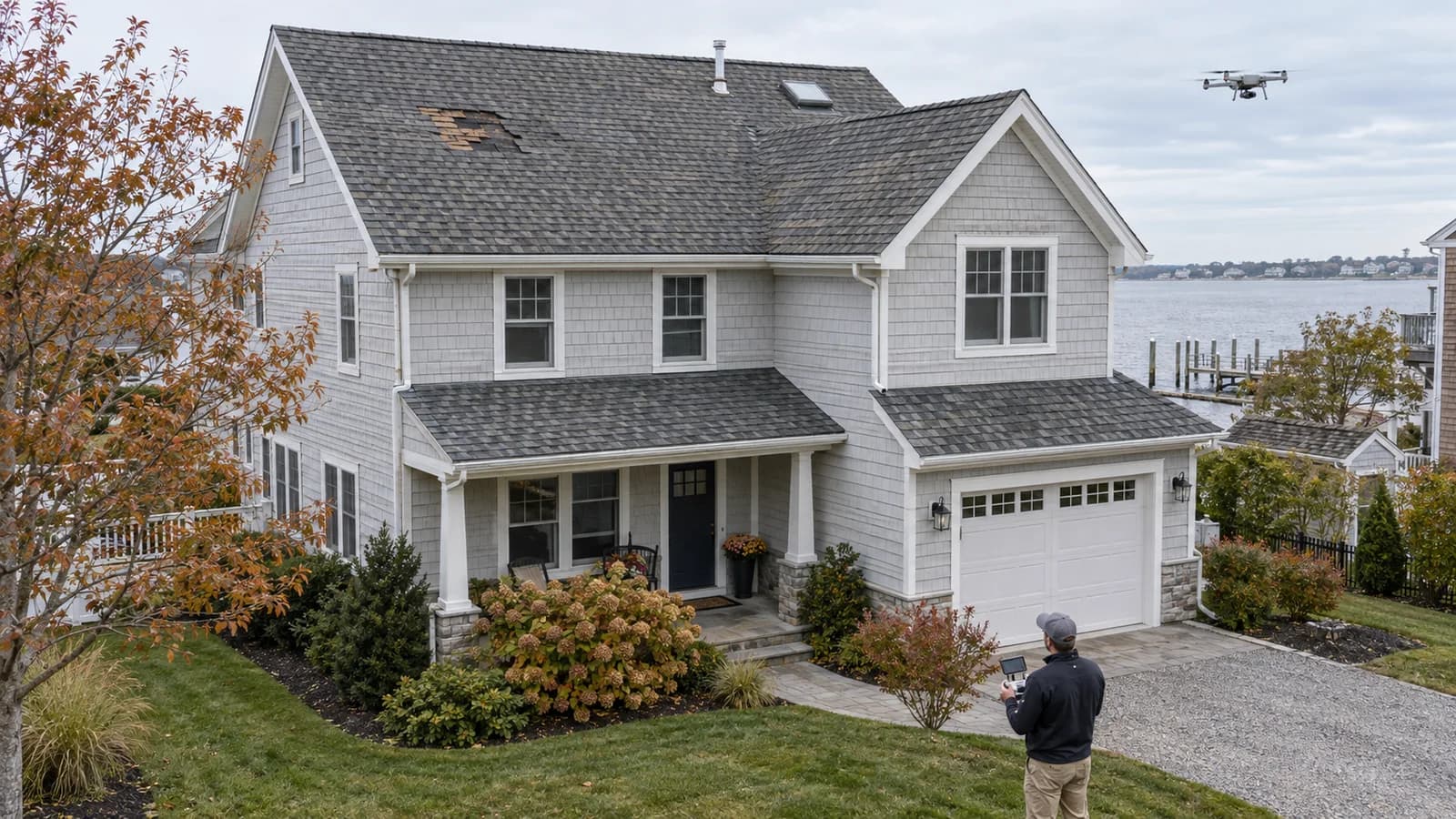
A free drone roof inspection can document slopes that are difficult to see safely from the ground and create useful photographs for the repair-versus-replacement discussion. Drone images do not reveal every concealed condition. Attic observations, moisture patterns, close inspection, and selective opening may still be needed before the final scope is clear. Express serves Ship Bottom, Long Beach Island, Ocean County, Monmouth County, Atlantic County, and nearby New Jersey communities.
Questions A Clear Roofing Proposal Should Answer
Whether the recommendation is repair or replacement, the proposal should make the reasoning easy to follow. Ask the contractor to connect each line item to an observed condition and to separate confirmed damage from allowances for conditions that cannot be seen until materials are removed.
- Where is water entering, and what evidence supports that conclusion?
- Is the problem isolated, or what other areas show related deterioration?
- What will be removed so the decking and flashing can be evaluated?
- Which existing materials will remain, and why are they still serviceable?
- How will new materials integrate with the existing roof system?
- What workmanship and manufacturer warranty terms apply to this exact scope?
- If repair is chosen, what future warning signs should the homeowner monitor?
Frequently Asked Questions
Is It Better To Repair Or Replace A Roof?
Repair is usually better when the damage is isolated and the surrounding roof system remains serviceable. Replacement is often more appropriate when deterioration is widespread, leaks recur in different areas, structural or decking concerns are extensive, or another repair would provide little dependable service life.
Does One Roof Leak Mean I Need A New Roof?
No. One leak may come from a repairable flashing, shingle, vent, pipe boot, valley, or drainage problem. The roof should be inspected to identify the entry point, extent of damage, and condition of the surrounding materials before deciding.
Can Part Of A Roof Be Repaired?
Yes, some roof problems can be repaired in a defined area. A durable section repair depends on sound surrounding materials, compatible replacement products, accessible flashing and underlayment details, and suitable decking beneath the work.
How Old Should A Roof Be Before It Is Replaced?
There is no single replacement age for every roof. Material, installation, ventilation, weather exposure, maintenance, repair history, and present condition all matter. Treat age as context and base the decision on documented performance and condition.
Can A Roof Be Too Old To Repair?
An older roof may be difficult to repair reliably when shingles are brittle, materials cannot be matched, damage is widespread, or several components are failing. Age alone does not make repair impossible, but the surrounding roof must be able to support and integrate with the work.
Will Homeowners Insurance Pay For Roof Repair Or Replacement?
Coverage depends on the policy, cause of loss, exclusions, deductible, documentation, and insurer determination. Sudden covered damage may be treated differently from wear, maintenance, or long-term deterioration. Document the condition and contact your insurer or agent for policy-specific guidance.
Can A Drone Inspection Tell Whether I Need A New Roof?
Drone images can document visible damage, roof geometry, inaccessible slopes, and broad wear patterns without putting a homeowner on the roof. They may not reveal concealed decking, underlayment, flashing, moisture, or structural conditions, so additional inspection may be required.