
Plumbing
Why Is My Water Heater Leaking From the Bottom? Causes and What to Do
Water around the base of a water heater does not always mean the tank has failed. A drain valve, relief-valve discharge, a fitting above the unit, condensation, or an internal tank leak can all leave water on the floor.
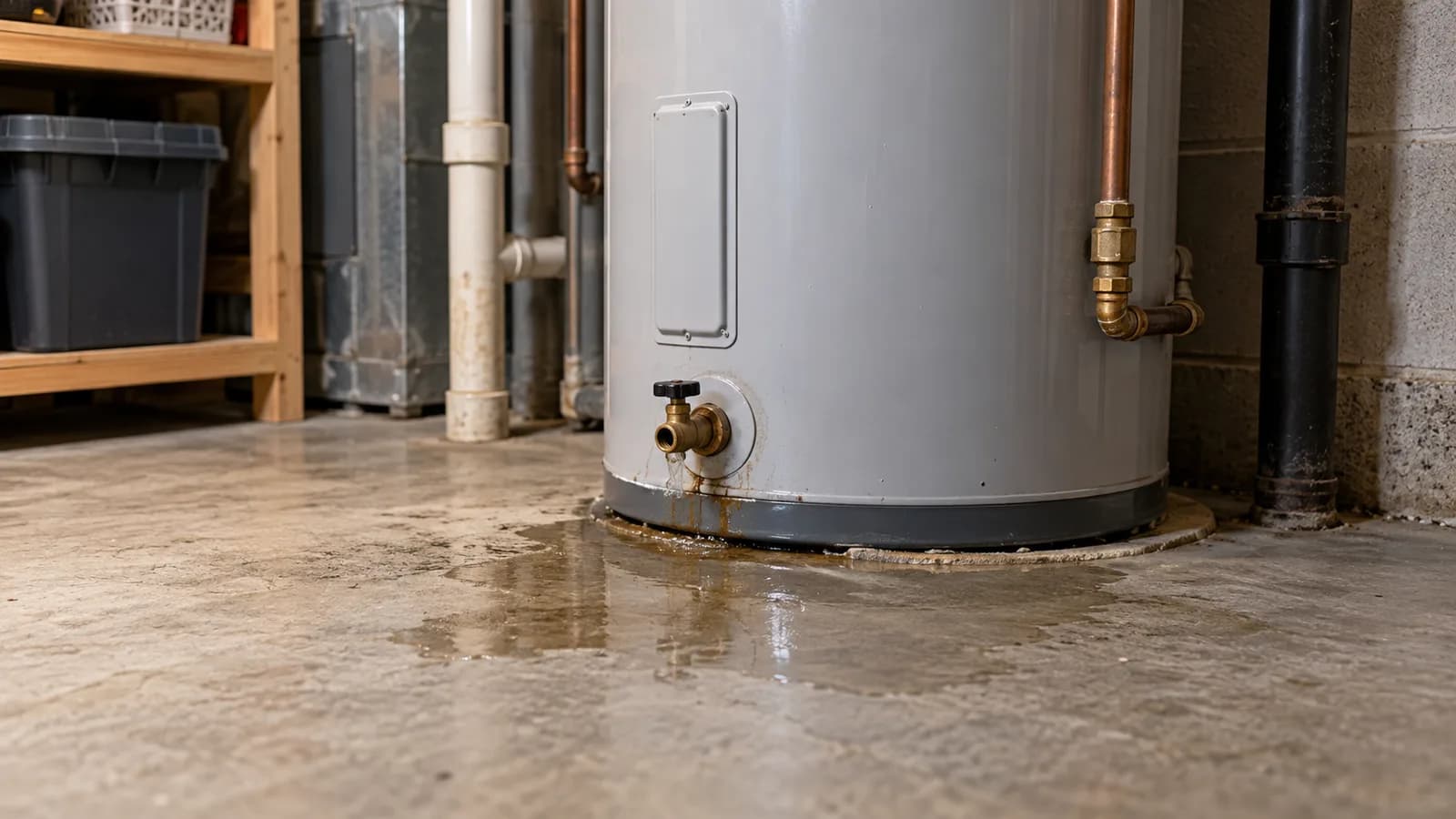
Illustrative image; this is not an Express customer property.
Quick Answer
Water under a water heater can come from a loose connection above the unit, a leaking drain valve, water discharged from the temperature-and-pressure relief valve, condensation, an electric-element gasket, or a leak inside the tank. Water at the base alone does not identify the source. If water appears to come through the tank jacket, seam, or bottom itself and continues after nearby piping is dry, the tank may have failed and usually needs replacement. Do not open the heater, drain it, or cap a relief-valve pipe to investigate. Keep clear of wet electrical equipment and have a licensed plumber identify the source and explain repair or replacement options.
The Short Answer: Water at the Base Is a Clue, Not a Diagnosis
A puddle beside a water heater can look like a failed tank, but water can travel down from a fitting or pipe above the floor. A drain valve near the bottom, a temperature-and-pressure (T&P) relief-valve discharge pipe, condensation, or a leak at an electric heating-element gasket can also leave water around the base. A nearby appliance or plumbing line may be the source instead.
The important first step is to avoid assuming the tank is bad—or that a small puddle is harmless. Note where water first appears, whether it is continuing, and whether it follows a heating cycle or heavy hot-water use. A plumber can inspect the heater and its connections before recommending repair or replacement.
What to Do First if You Find Water
If you see water around the heater, keep people away from the wet area and do not step into standing water to reach a switch, plug, control, or valve. Water and electrical equipment are a dangerous combination. If water is near wiring or electrical components, or you cannot reach a shutoff from a dry, safe location, leave the area and call for professional help.
If you smell gas or hear gas escaping, leave the building without operating lights, appliances, or other switches. From a safe location, contact the gas utility or emergency services. Do not try to troubleshoot the heater yourself.
When there is no electrical or gas hazard and the correct shutoff is clearly accessible, you may be able to stop further water flow using the heater's cold-water supply valve or the home's main shutoff. Only do this if you can identify the valve and operate it safely; do not force a stuck valve or operate utility-owned equipment. Follow the heater's manual for shutdown instructions, and arrange an inspection even if the flow stops.
- Keep clear of wet electrical equipment and do not remove access panels or insulation.
- Take a photo of where water appears and note whether it returns after cleanup.
- Do not cap, plug, or block the T&P valve or its discharge pipe.
- Do not drain or flush the heater to find the leak; hot water and pressurized components can cause injury.
Common Reasons a Water Heater Leaks Near the Bottom
Several different problems can produce the same symptom. These are clues to share with a plumber—not instructions to disassemble or repair a pressurized appliance.
- Water tracking down from a connection: A cold-water inlet, hot-water outlet, fitting, or nearby pipe can leak above the heater and run down its outer jacket. The lowest wet spot may not be the source.
- A drain valve that is seeping: The drain valve is low on many tank-style heaters. A worn valve or a valve that is not sealing can leave droplets near the base. Do not force it or remove its cap to test it.
- Water from the T&P relief-valve discharge pipe: This safety device releases water if temperature or pressure conditions require relief. Discharge may travel to the floor and look like a tank leak. A plumber should investigate the valve and system conditions; never cap the valve or pipe.
- Condensation: Moisture can form when cold incoming water cools heater surfaces or pipes, especially around a heavy draw or startup. Condensation can resemble a leak, but recurring or substantial water should still be checked rather than assumed to be harmless.
- An electric-element gasket: On some electric tank heaters, water may seep around a heating-element gasket and collect below. Diagnosis and repair involve electrical and hot-water hazards and should be left to a qualified professional.
- A leak inside the tank: Corrosion or a failure in the tank can allow water to escape through the outer jacket or bottom. If a tank itself is confirmed to be leaking, replacement is generally required; a puddle alone is not enough to confirm that diagnosis.
- Another source nearby: Check visually from a safe, dry position for a water softener, washing machine, nearby pipe, drain, or other appliance that could be releasing water toward the heater.
How to Observe the Leak Without Taking the Heater Apart
If the area is dry and safe to approach, use a flashlight to look at the floor, drain pan, visible pipes, and outside surfaces of the heater. You can blot accessible, external pipe connections with a dry paper towel and note which area becomes wet first. Do not touch exposed wires, burner areas, hot pipes, the relief valve, or water that may be hot. Do not remove panels, insulation, drain-valve caps, or the relief-valve discharge pipe.
After noting the location, you can dry the floor only if it is safe and the water is not hot. Watch from a safe distance to see where moisture returns, and take a photo for the plumber. If the source is hidden behind the jacket or cannot be seen without moving the heater or opening it, stop there and schedule service.
When a Water-Heater Leak Needs Prompt Service
Arrange prompt plumbing service if water is actively spreading, the leak returns after cleanup, a relief-valve pipe is discharging, the heater's outer jacket appears wet, or you cannot identify the source. A leak from the tank itself can worsen without much warning, and water may damage flooring or nearby materials.
Treat water near electrical components, a strong gas odor, a hot-water spray, or rapid flooding as an immediate safety issue. Leave the area if needed and contact the appropriate emergency or utility service from a safe location. Do not wait for a routine appointment when there is an active hazard.
Can the Water Heater Be Repaired, or Does It Need Replacement?
The answer depends on the actual source. A leaking external fitting, drain valve, relief-valve issue, or electric-element gasket may call for a component repair after the underlying cause is checked. If the storage tank itself is leaking, replacing the heater is generally the practical solution. A plumber should confirm the source before you decide based on the puddle's location alone.
Ask the plumber to show you where the water is coming from, explain whether the tank or an attached part has failed, and outline the repair and replacement options. If replacement is recommended, compare the equipment, installation work, permits or inspections that apply locally, and the condition of the existing connections. For a home that sits vacant in winter, include the property's freeze-protection plan in that conversation.
What New Jersey Shore Homeowners Should Keep in Mind
In Ocean, Monmouth, and Atlantic County homes—including seasonal properties—a slow leak may continue while no one is there. If a water heater is in a closed-up home, have a trusted person check the utility area when the property is reopened or after a cold-weather absence. A smart leak sensor near the heater can provide an alert if water reaches it, but it cannot identify every leak or replace an inspection.
If the home has had previous pipe repairs, freeze exposure, or repeated water-heater leaks, tell the plumber. Those details help guide the inspection. Express handles water-heater plumbing repairs and replacement; we do not provide water-damage restoration.
Get the Leak Identified Before Choosing a Fix
A water heater leaking from the bottom can have a simple external cause, a safety-valve discharge, condensation, or a failed tank. Because those conditions need different responses, the safest next step is a diagnosis—not a guess based on where the puddle sits. Express can inspect the heater and explain the repair or replacement options for your New Jersey home.
Frequently Asked Questions
Does water under my water heater mean the tank is leaking?
Not necessarily. Water may run down from a pipe or fitting above the heater, come from the drain valve or T&P discharge pipe, form as condensation, or come from an electric-element gasket. A plumber should confirm whether the tank itself is leaking before recommending replacement.
Can I use a water heater that is leaking from the bottom?
Do not assume it is safe to keep operating. Keep clear if water is near electrical parts, gas controls, or hot surfaces, and follow the exact owner's manual only if the controls are safely accessible. Have a plumber identify the source promptly; leave the area and seek emergency help for a gas odor, hot-water spray, or rapidly spreading water.
Can a water heater leaking from the bottom be repaired?
It depends on the source. Some leaks from external connections, a drain valve, relief-valve components, or an electric-element gasket may be repairable. If the storage tank itself is leaking, replacement is generally required. The water's location on the floor does not prove which part has failed.
Should I cap a dripping temperature-and-pressure relief pipe?
No. Never cap, plug, or block a temperature-and-pressure relief valve or its discharge pipe. It is a safety device. Have a plumber investigate why it is discharging.
Could condensation look like a water-heater leak?
Yes. Condensation may form on a heater or nearby piping when cold incoming water cools surfaces, including after a heavy hot-water draw or startup. Because other leaks can look similar, recurring or substantial water should be checked rather than assumed to be condensation.
Who should I call if my water heater is leaking?
Contact a licensed plumber to locate the source and explain repair or replacement options. If you smell gas, leave the building and call the gas utility or emergency services from a safe location. If water is near electrical equipment, stay out of the wet area and do not touch switches or controls there.