
Roof Repair
How Long Does an Asphalt-Shingle Roof Last in Coastal New Jersey?
There is no reliable expiration date for every asphalt roof. On the New Jersey coast, installation quality, wind exposure, ventilation, maintenance, and the condition of flashing and underlayment all affect how much service life remains.
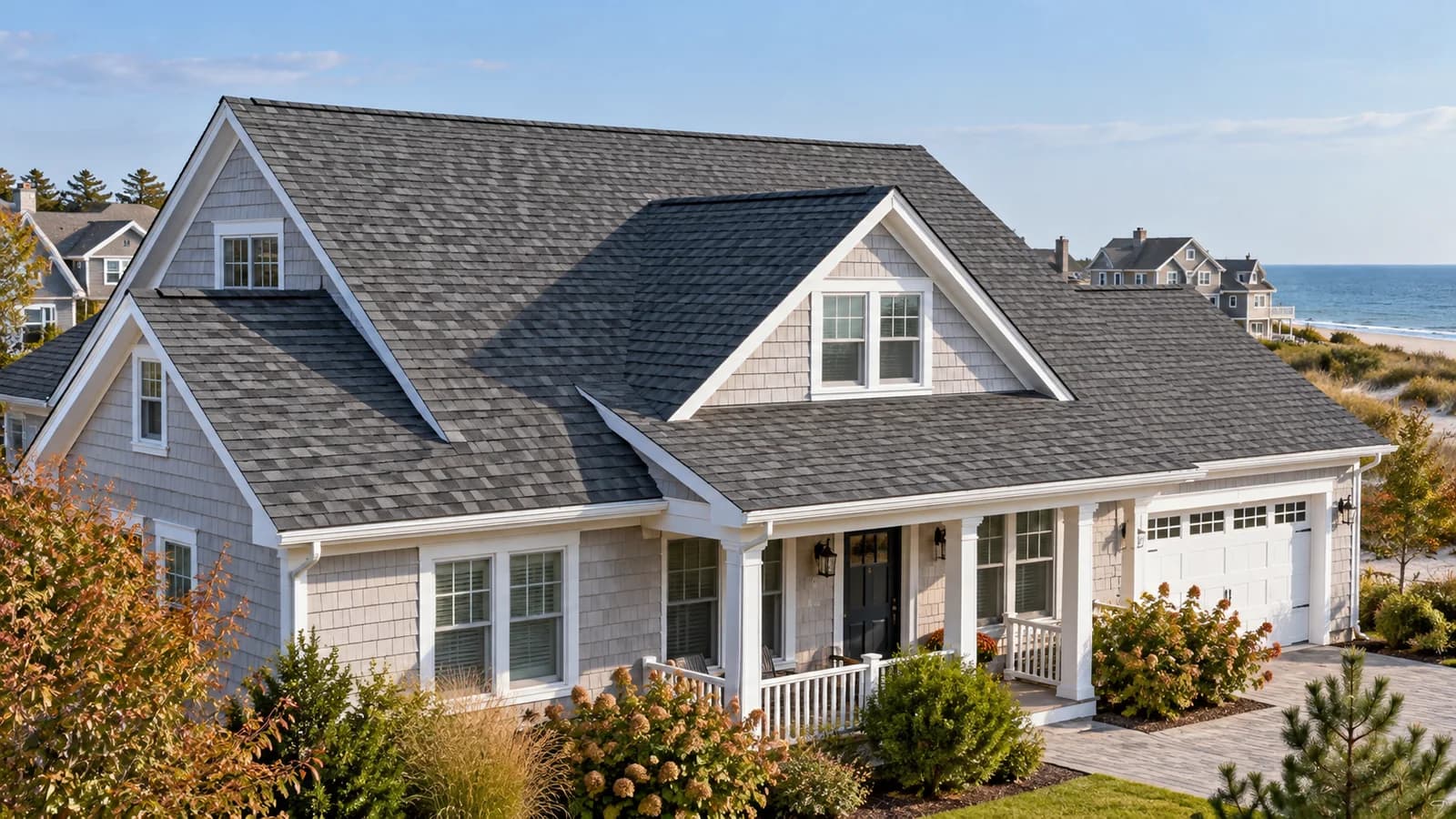
Illustrative image of a shore-style home; it does not depict an Express customer property or a roof inspection.
Quick Answer
An asphalt-shingle roof does not have one guaranteed lifespan. A general planning range often quoted for residential roofs is about 20 to 25 years, but the actual service life of a coastal New Jersey roof can be shorter or longer depending on the shingle and full roof system, installation, ventilation, maintenance, wind exposure, and storm history. That range is not a replacement deadline, and a warranty term is not a promise that a roof will last that long. The best estimate comes from reviewing the roof's age and repair history and having a qualified roofer inspect the shingles, flashing, roof edges, ventilation, and any visible signs of moisture or deck problems.
The Short Answer: Use the Age as a Clue, Not a Countdown
Homeowners often ask how long an asphalt-shingle roof lasts because they need to budget, plan a sale, or decide whether a leak calls for a repair or a new roof. There is no single number that can make that decision for every New Jersey home. A general manufacturer guide places many residential roof replacements in the 20-to-25-year range, but that is a broad planning reference—not a guarantee or an inspection of your property.
Two roofs installed in the same year can age differently. Shingle product, installation details, roof slope and orientation, attic ventilation, past repairs, surrounding trees, storm exposure, and the condition of flashing and underlayment all matter. Coastal location adds exposure to strong winds and wind-driven rain, but it does not create a precise formula for subtracting years from a roof's life.
Why Coastal New Jersey Exposure Matters
Along the Jersey Shore, wind and wind-driven rain can test the roof covering and the details that keep water out: edges, valleys, flashing, roof-to-wall connections, vents, and other penetrations. A shingle's wind rating is only one part of performance. The way the complete roof system is selected and installed—including fastening, underlayment, and flashing—also matters. FEMA's coastal construction guidance specifically discusses enhanced asphalt-shingle installation practices for high-wind coastal regions.
Salt carried in coastal air is also worth considering, especially for metal components such as fasteners and flashing. It is not a stand-alone way to calculate asphalt-shingle life. Ask the roofer to inspect the whole assembly and note any corrosion, loose details, water entry, or repeated repairs rather than attributing every roof problem to salt air.
Nor'easters, tropical systems, heavy rain, freeze-thaw cycles, and debris can cause damage at any roof age. A newer roof can be damaged in one storm; an older roof may still be shedding water but have less margin for additional wear. After a significant storm, observe from the ground and arrange a professional inspection if anything looks displaced or a leak appears.
Roof Signs That Deserve a Closer Look
A single shingle or a few granules do not establish that the entire roof has reached the end of its life. Look for patterns and changes, and have a roofer evaluate the cause. From a safe place on the ground, you may be able to notice:
- Shingles that are missing, cracked, curled, lifted, or no longer lying flat.
- Repeated bare-looking or uneven patches, exposed fasteners, or pieces found in the yard.
- Damaged or separated flashing near chimneys, walls, valleys, skylights, and plumbing vents.
- Gutter or downspout areas with unusually heavy granule buildup; a small amount alone is not a diagnosis.
- Recurring ceiling stains, damp attic materials, daylight through roof boards, or a visibly sagging roofline.
What Determines How Much Life Is Left?
Start with the records: the installation year, shingle product if known, permits or invoices, warranty documents, and any repair history. If you do not know the roof's age, an inspector may identify clues, but a visual estimate is not the same as a documented installation date.
Then look beyond the visible shingle surface. Flashing, underlayment, ventilation, roof edges, and roof decking can influence performance. Some conditions are hidden until a repair opens the roof. A roof may look acceptable from the driveway while a detail around a penetration needs attention; conversely, discoloration or a small amount of loose granule may not mean the roof needs replacement.
Manufacturer warranties describe specific coverage terms and conditions. They are not a forecast of the exact service life of a roof on a particular shore home. Read the actual warranty, including exclusions and transfer requirements, and ask the installer to separate warranty coverage from their assessment of the roof's present condition.
A Safe Homeowner Check Before Calling a Roofer
You can gather useful information without climbing onto the roof. Roof surfaces may be steep, wet, brittle, or unstable, and a close-up photo is not worth a fall. Do not walk on shingles or use a ladder after a storm.
- Photograph each roof slope from the ground, from a safe distance, and note the date and weather.
- Check the attic only if it is safely accessible; look for active moisture, staining, daylight, or a new musty smell without disturbing insulation or wiring.
- Write down when a leak occurs, where it appears indoors, and whether it happens with wind-driven rain or any heavy rainfall.
- Gather installation paperwork, repair invoices, warranty information, and prior inspection photos.
- After significant storm damage or an active leak, arrange a professional assessment and keep the area below a suspected loose roof component clear.
Can Maintenance Help an Asphalt Roof Last Longer?
Routine attention can help catch small problems before water travels into the home, but maintenance cannot reverse widespread wear or guarantee a particular number of extra years. Keep gutters and downspouts clear enough to drain, trim branches that rub or hang over the roof where appropriate, and address damaged flashing or shingles through a qualified roofer.
Ventilation is part of the roof system, not a one-size-fits-all add-on. If the attic is unusually hot or humid, ask a roofer to evaluate the ventilation and moisture conditions as a system before adding vents. More openings do not automatically improve a roof, and improper changes can create new problems. NRCA's asphalt-shingle homeowner guide covers inspection and proactive maintenance; follow the specific product and system instructions for your roof.
Repair or Replace? Let the Condition Guide the Decision
A localized problem—such as a damaged shingle or a clearly limited flashing issue—may be repairable when the surrounding roof remains serviceable and compatible materials are available. Replacement becomes more likely when deterioration is widespread, leaks recur in different areas, multiple components are failing, or a repair would leave little dependable service life. Roof age is one factor, not the decision by itself.
Ask the contractor to show you the observed conditions, explain which items can be repaired and which cannot, and describe what is included in each option. A useful proposal distinguishes visible findings from conditions that may be revealed only after work begins. If you are comparing bids, check that they cover comparable roof areas, system components, flashing details, cleanup, and any anticipated decking work.
Planning for a Shore Home Before the Next Storm Season
If the home is seasonal or may sit vacant, do not wait for an interior stain to learn that a roof detail needs attention. Keep recent roof photos and repair records where the person checking the property can find them. After severe wind or rain, ask the home-watch contact to report visible changes and any new interior moisture; they should not climb onto the roof to investigate.
For a New Jersey shore home, the best roof-life estimate is a documented inspection of the specific roof—not a generic age chart. Express provides roofing inspections, repairs, and replacement estimates in coastal New Jersey. A roofer can review the visible condition, explain whether a targeted repair is reasonable, and outline replacement planning if the system is nearing the end of its useful service.
Frequently Asked Questions
How many years does an asphalt-shingle roof last in New Jersey?
There is no guaranteed lifespan for every roof. A general planning reference for many residential roofs is roughly 20 to 25 years, but actual life depends on the shingles and full roof system, installation, ventilation, maintenance, storm exposure, and repair history. A professional inspection is more useful than age alone.
Does living near the ocean shorten asphalt-shingle roof life?
Coastal homes can face strong wind, wind-driven rain, and salt exposure that may affect roof details and metal components. Distance from the water alone cannot predict roof life; installation quality, exposure, maintenance, ventilation, and the condition of flashing and underlayment also matter.
Should I replace my roof as soon as it reaches 20 years old?
Not automatically. Twenty years is not an expiration date. Have a qualified roofer inspect the shingles, flashing, roof edges, ventilation, and signs of moisture, then compare the repair options with the overall condition and documented age of the roof.
Can I inspect my asphalt-shingle roof myself?
You can observe it from the ground and, if safe, look for signs of moisture in an accessible attic. Do not climb onto a roof, especially when it is wet or after a storm. A roofing professional should inspect the roof surface and details closely.
Does a shingle warranty tell me exactly how long the roof will last?
No. A warranty covers specified products or workmanship under written conditions; it is not a promise that a roof will last for the entire warranty term. Review the actual warranty and have the roof's current condition assessed separately.
Does storm damage mean I need a full roof replacement?
Not necessarily. Some storm damage may be limited and repairable, while widespread damage or existing deterioration may make broader work appropriate. A roofer should document what was affected and explain repair and replacement options.