
Roof Repair
After A Nor'easter: What New Jersey Homeowners Should Check First
Start safely after a coastal storm. Learn what to document from the ground, what to check inside, when to protect a leak, and when a professional inspection makes sense.
Quick Answer
After a nor'easter, protect people first: stay away from downed wires, avoid flooded areas, and do not climb onto a wet roof or use damaged electrical equipment. Once it is safe, photograph conditions from the ground and inside the home, look for active leaks and changes around ceilings, windows, doors, gutters, siding, and plumbing, then make a written list of what you find. A roofing professional can inspect storm-related roof and exterior concerns; a licensed plumber can address plumbing leaks or damaged piping. Express provides roofing, plumbing, HVAC, and renovation services—not water-damage restoration—so restoration, electrical hazards, and emergency conditions should go to the appropriately qualified provider or emergency services.
Start With Safety, Not A Roof Inspection
A nor'easter can leave behind coastal flooding, wind-driven debris, standing water, weakened tree limbs, and damage that is not obvious from the street. Do not rush onto a roof, climb a wet ladder, enter standing water, or touch a fallen wire. If there is an immediate threat to life, a gas odor, sparking equipment, or a downed line, leave the area and contact emergency services or the utility before thinking about repairs.
The State declared an emergency for Ocean, Monmouth, Atlantic, Burlington, Cape May, Cumberland, Middlesex, and Salem counties as this storm approached, warning of damaging winds, significant coastal flooding, and beach erosion. That context matters: a house can look mostly normal after the water recedes while still having a new leak path, loosened exterior component, or moisture issue that deserves attention.
Make A Calm, Time-Stamped Record Before Cleaning Up
If conditions are safe, take wide photos and short video from the ground before moving debris or making temporary changes. Capture each side of the house, rooflines visible from the ground, gutters and downspouts, windows and doors, detached structures, outdoor equipment, and any water line or standing-water evidence. Inside, photograph stained ceilings, wet insulation, drips, damaged finishes, and the location of any active leak.
Keep a simple timeline: when you first noticed the issue, whether water is active or has stopped, what weather was occurring, and any steps you took to protect the home. This record helps a contractor understand the condition when they arrive and may be useful when speaking with an insurer. Do not discard damaged materials until you understand your insurer's documentation requirements unless they create an immediate safety or sanitation concern.
- Photograph wide views first, then close-ups with a recognizable location in the frame.
- Note active drips, not just stains left after they stop.
- Save invoices for emergency protection or repairs.
- Do not make permanent repairs before documenting the original condition when it is safe to wait.
Check The Roof And Exterior From The Ground
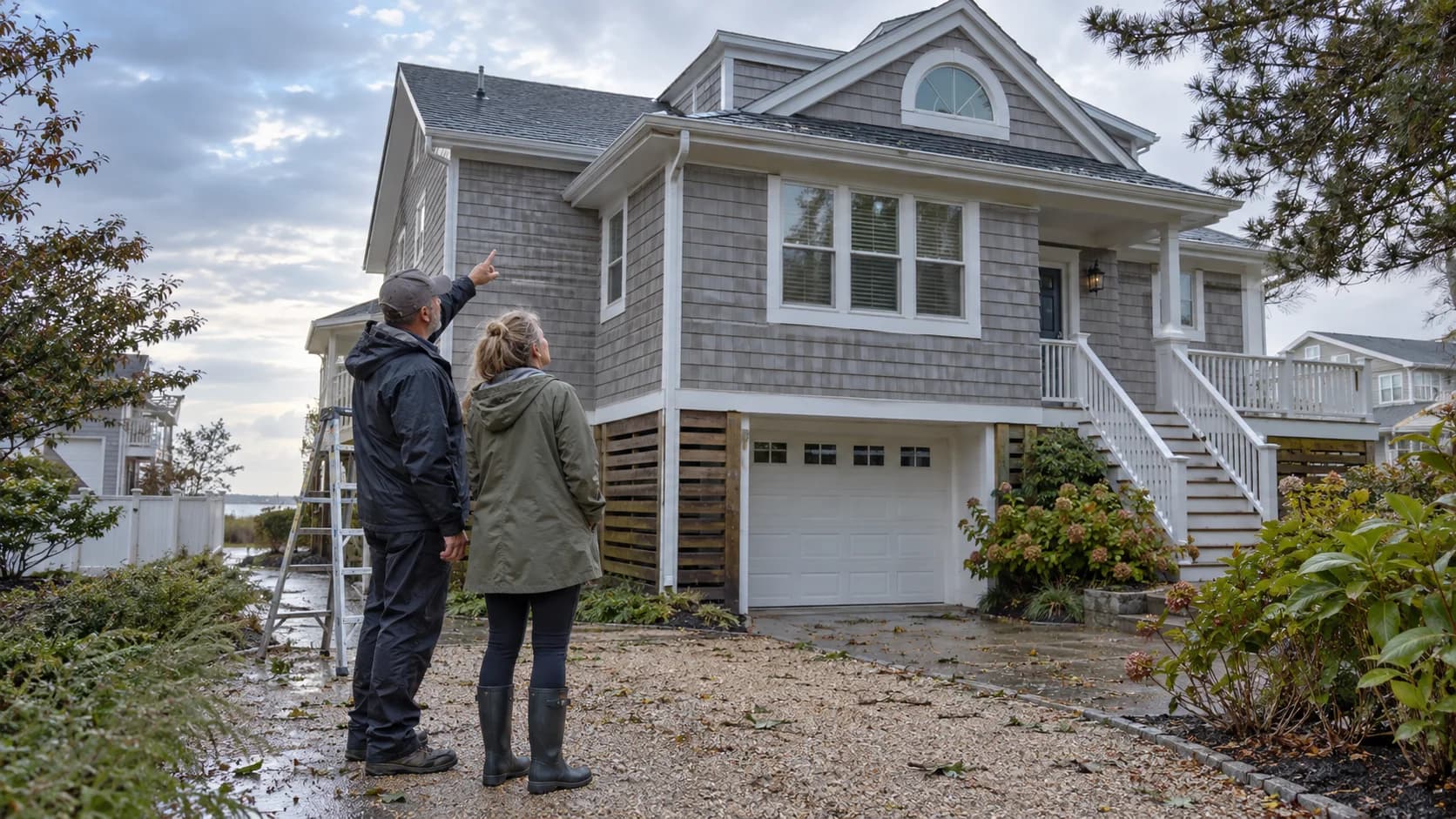
Wind can lift or crease shingles, loosen flashing, displace ridge components, bend gutters, and send branches across roof surfaces. Look from a safe distance for missing or visibly lifted shingles, loose metal, fresh debris lodged in valleys, sagging gutters, displaced downspouts, damaged siding, cracked or leaking window surrounds, and fallen limbs resting on the structure. Do not use binoculars as a reason to get closer to a hazard, and do not climb up to confirm a suspicion.
A roof leak may appear well away from the actual roof opening because water can travel along sheathing, framing, or insulation. An attic smell, a new ceiling stain, peeling paint, or a damp spot near a wall can all justify a professional assessment even if no shingle is visibly missing. If a tree or large branch has contacted the house, avoid moving it yourself when it could shift roofing, wiring, or structural components.
Address Active Water Without Creating A Bigger Problem
For a small active ceiling drip, move belongings out of the area, use a container to catch water, and protect the floor. If a ceiling is bulging, stay clear of it; water weight can make a ceiling fail suddenly. Do not puncture it unless you understand the risk and it is safe to do so. Water near a light fixture, outlet, panel, or appliance is an electrical hazard—do not touch the fixture or stand in water, and call a qualified electrician or emergency service as appropriate.
A temporary interior measure may limit additional damage, but it does not identify the source or replace a roof repair. Avoid tarping a roof yourself in post-storm wind or wet conditions. A qualified roofing professional can determine whether the source is roofing, flashing, a penetration, siding, or another exterior detail and recommend the appropriate repair.
Look For Plumbing Problems After Flooding Or Freezing Rain
Storm impacts are not limited to the roof. Check accessible plumbing areas for new drips under sinks, around water heaters, near exposed pipes, and at appliance connections. Watch for a sudden drop in water pressure, a meter that continues moving when all fixtures are off, a new damp spot near a pipe route, or a toilet, shower, or drain that is no longer behaving normally. If you can safely identify a plumbing leak, use the fixture shutoff or main water shutoff only if you know where it is and can reach it without entering a hazardous area.
Do not use a flooded basement, crawlspace, or garage as a DIY work zone until power and structural hazards have been addressed. Express can diagnose and repair plumbing leaks, damaged piping, water-heater concerns, and related repiping needs. Water extraction, mold remediation, and flood-damage restoration require a restoration provider with that specific scope.
Do Not Forget HVAC And Outdoor Equipment
Before restarting equipment that was exposed to floodwater or standing water, have it evaluated by the appropriate qualified professional. Do not run an outdoor condenser, heat pump, furnace, boiler, or electrical component that may have been submerged or damaged. Take photos of the water line and the equipment's position first, if it can be done safely.
Even when equipment was not flooded, inspect from a distance for loose covers, damaged refrigerant-line insulation, shifted pad supports, debris blocking the unit, or detached venting. Do not remove panels or reach into equipment. After wind and rain, an HVAC professional can assess equipment performance and visible storm-related concerns.
Know When To Call Your Insurer And A Professional
Call your insurer promptly when there is a potentially covered loss, but do not wait to take reasonable steps to prevent ongoing damage. Ask what documentation they need, whether they want to inspect before permanent work begins, and how to submit photos and invoices. A contractor can explain observed conditions and the scope of proposed repair; the insurer determines coverage under the policy.
Schedule a professional assessment when you have an active roof leak, missing or lifted roofing, tree contact, flashing or gutter damage, a plumbing leak, or evidence that water entered the building. If the home has visible structural movement, an electrical hazard, sewage exposure, or a large area of flood damage, contact the appropriate emergency, utility, structural, electrical, or restoration professional first.
A Simple Post-Storm Checklist
The point of a post-storm check is not to diagnose every issue from the yard. It is to separate immediate hazards from repair needs, preserve useful documentation, and get the right professional involved without taking unnecessary risks.
- Stay away from downed wires, unstable trees, floodwater, and wet roofs.
- Photograph the property, water evidence, and active interior damage before cleanup when safe.
- Catch active water and move belongings; keep clear of bulging ceilings and wet electrical areas.
- Check rooflines, gutters, siding, windows, vents, and outdoor equipment from the ground.
- Look for accessible plumbing leaks and only use shutoffs you can reach safely.
- Contact your insurer for a potentially covered loss and save receipts.
- Arrange a qualified inspection for roof, plumbing, HVAC, electrical, structural, or restoration concerns based on the actual problem.
Frequently Asked Questions
Should I Get On My Roof After A Nor'easter?
No. A wet roof, windblown debris, compromised materials, and wet ladders create a serious fall risk. Document what you can from the ground and arrange a professional roof inspection if you see damage or have a leak.
What Should I Photograph For Storm Damage?
Take wide and close photos or video of each exterior side, visible roof and gutter conditions, debris, water lines, damaged finishes, active leaks, and affected equipment. Include time and location notes, and save receipts for protective work.
Can A Roof Leak Start Days After A Storm?
Yes. Water can travel through roof and wall assemblies before it appears indoors. A new ceiling stain, damp smell, peeling paint, or drip after the weather clears warrants attention.
What Can Express Help With After Storm Damage?
Express can assess and repair roof and exterior leak concerns, plumbing leaks and damaged piping, HVAC equipment concerns, and renovation-related repairs within our scope. We do not provide water extraction, mold remediation, or flood-damage restoration.
Should I Turn On HVAC Equipment That Was Near Floodwater?
Do not restart equipment that was submerged or may have been damaged until the appropriate qualified professional evaluates it. Photograph the water line and condition from a safe distance first.